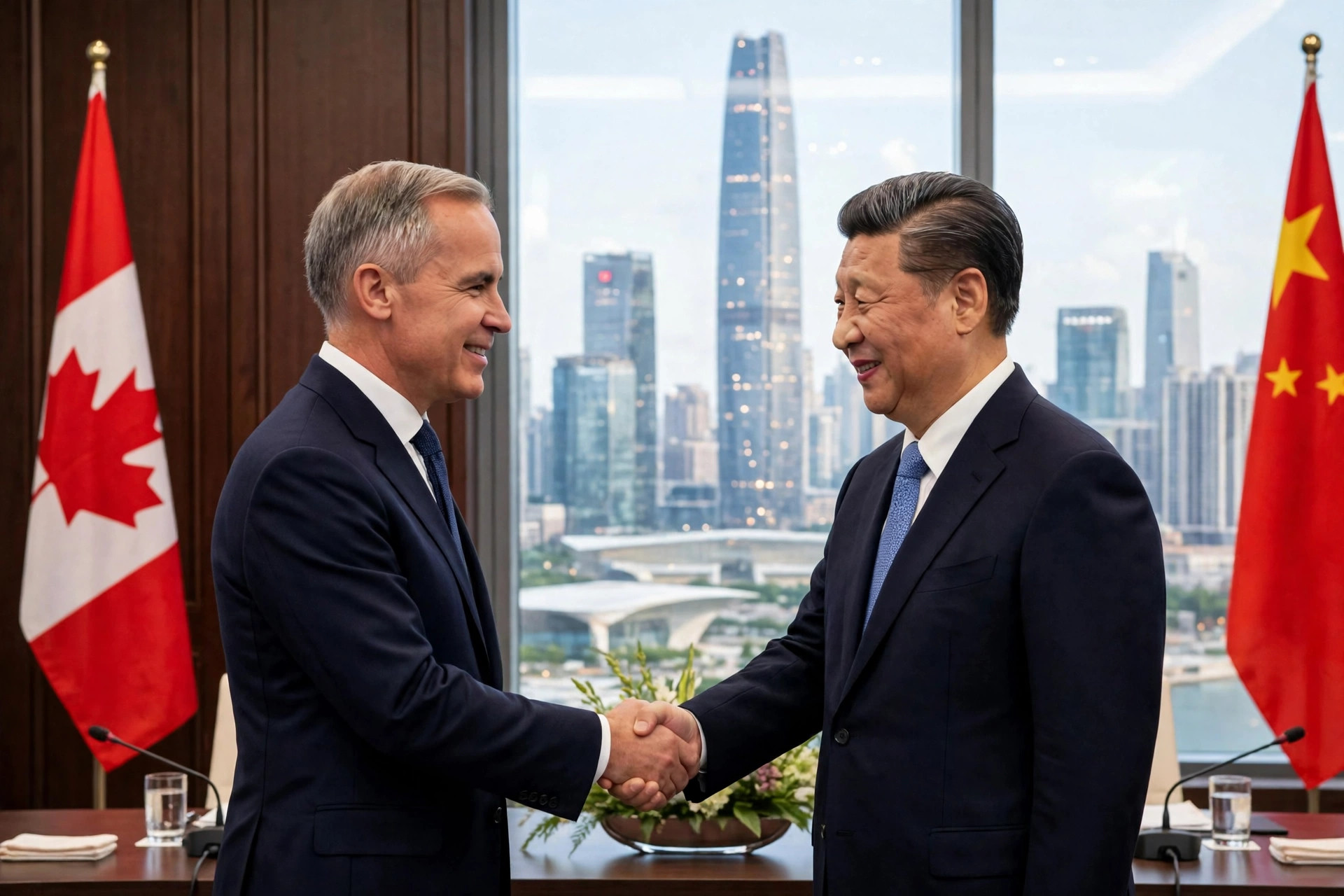
Canada is widening its trade opening with China, striking fresh tariff relief and financial cooperation deals in Shenzhen, even as Prime Minister Mark Carney warned that a new trade agreement with the United States is still not within reach. The moves, announced after Carney met Chinese President Xi Jinping on the sidelines of the Asia-Pacific Economic Cooperation (APEC) summit, underline Ottawa’s strategy of cutting its heavy reliance on Washington.
Carney and Xi agree new Canada-China trade relief
According to Reuters, China will offer tariff relief on around C$400 million ($280 million) worth of Canadian exports, including frozen pork cuts and fish and seafood. Canada, in exchange, will keep tariff exemptions for certain Chinese steel and aluminium products in place for another two years, and add remissions to another 32 steel and aluminium items that Canada does not produce in sufficient quantities.
The two countries are also widening access for financial firms in each other’s markets, Carney said on Wednesday, and have renewed the currency swap arrangement between their central banks, giving them what he called the “tools to act decisively” in times of financial stress.
A step-by-step reset after years of strain
Foreign Minister Anita Anand told Reuters that Canada is taking a “step-by-step” approach to re-engaging with China after years of strained relations, as Ottawa looks to the world’s second-largest economy to reduce its dependence on the US. Carney said Canada began to recalibrate ties after he took office last year, boosting exports to China by more than a third this year, while two-way trade stands at C$125 billion ($87 billion).
According to Carney, Canada has restored market access for more than 99% of the trade previously subject to punitive tariff action. Xi said stronger ties served both countries’ interests and supported global stability and prosperity. “This is the right choice,” he said.
Tariff cuts build on January breakthrough
The latest package builds on an agreement the two leaders made in January to open up trade and start repairing the strained diplomatic relationship. Under that deal, Canada lowered its 100% tariff on Chinese electric vehicles to 6.1%, allowing an initial 49,000 vehicles into the country each year. Tuesday’s meeting was Carney’s second bilateral with Xi in China this year, and both have produced tariff and market-access resolutions covering Canadian canola, seafood and pork, and Chinese steel, aluminium and electric vehicles.
Carney: US deal possible, but “not there yet”
The China opening comes as trade talks between Ottawa and Washington remain stalled. Talks broke down in August, and while Carney said on Saturday that he had spoken with President Donald Trump and senior officials — and that there was progress towards a possible deal — differences remained.
He told reporters that the US had fundamentally changed its trade objectives. “The United States fundamentally changed its trade objectives, and we are focused on getting the right deal for Canadians,” Carney said.
Canada looks beyond Washington
The day before the Xi meeting, Carney said Canada could turn to Chinese automakers if talks with Washington fail to hold together the closely integrated North American auto industry. He also pointed to trade deals reached in recent days with the Association of Southeast Asian Nations (ASEAN) and with the Philippines, and said Canada expects to sign a new trade deal with India in the next few months. For now, the message from Shenzhen is clear: Canada will keep building trade options elsewhere while it waits for Washington to come to terms it can accept.
Related coverage on TrendWire
- Canada Retaliatory Tariffs Hit US Goods as Trump Warns Escalation
- Xi-Trump-Putin Summit: Beijing Confirms Historic Three-Way Talks
- Modi Canada Visit: PM to Travel to Toronto, Ottawa on Dec 11–12
Tags: #MarkCarney #Canada #China #TradeDeal #USTariffs #APEC #XiJinping #CanadaChina
Comments (0)