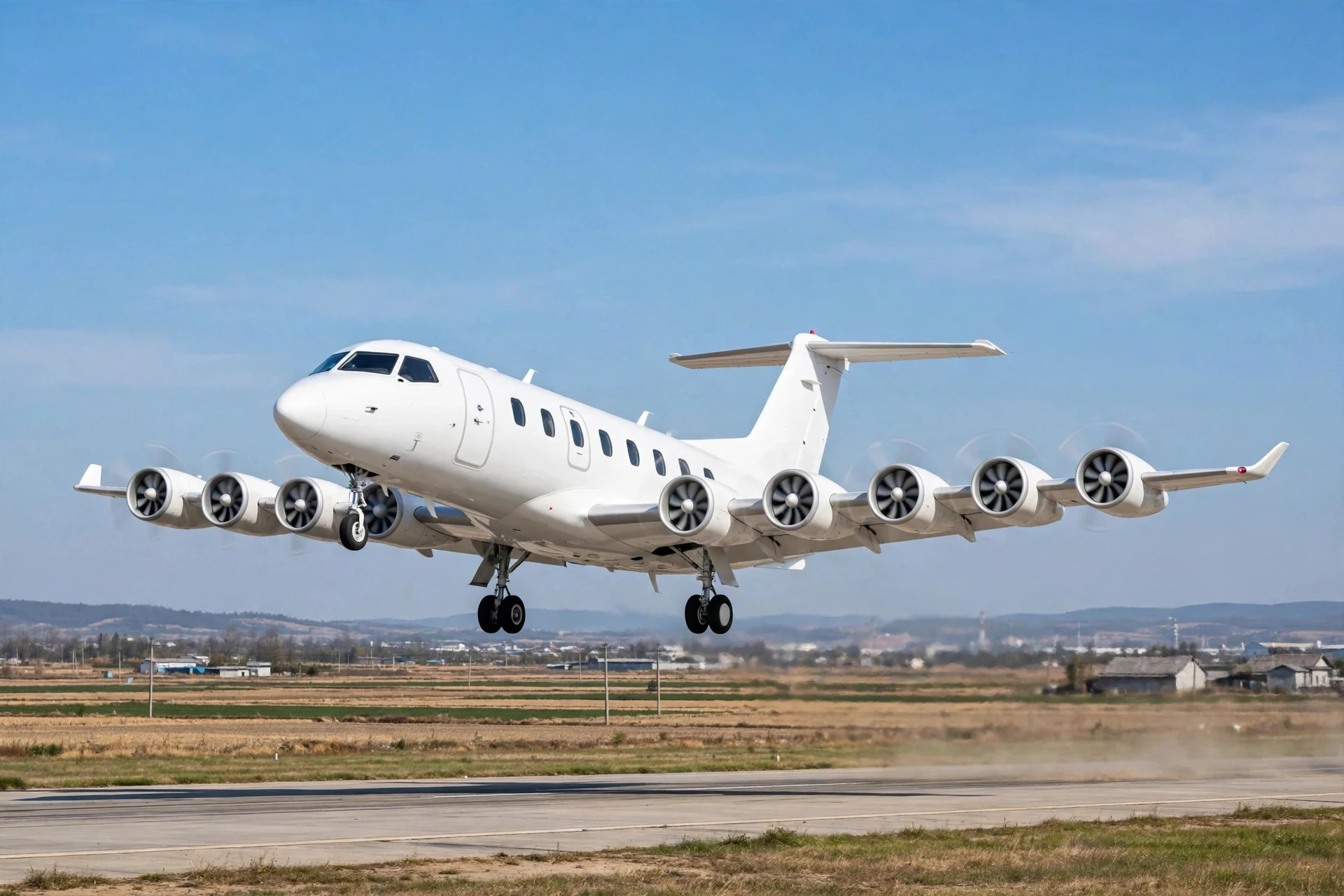
China has taken a major step towards battery-powered passenger flight after its CE-25A all-electric aircraft completed its first crewed flight on Saturday, 14 November 2026. The 10-tonne aircraft, developed by the Commercial Aircraft Corporation of China (COMAC), flew over Binzhou in Shandong province with two pilots and a flight test engineer on board, according to reports carried by China's state-run news agency Xinhua and reported by CGTN and Geo News.
The milestone marks the first time people have flown aboard the aircraft, which had previously completed 19 unmanned autonomous test flights. It is the latest sign of how quickly electric aviation is moving from concept to working hardware, and it puts China at the front of the race to build a practical electric airliner for short regional routes.
CE-25A electric aircraft completes first crewed flight
According to COMAC, the test lasted 57 minutes and 46 seconds, including 16 minutes and 38 seconds in the air, covering a distance of 60.4 kilometres. The aircraft performed normally and all parameters met expectations, the company said in a statement.
The flight follows the CE-25A's first unmanned autonomous flight on 2 February 2026. Since then, COMAC has carried out 19 uncrewed autonomous verification flights, gradually building confidence in the aircraft's flight systems before putting a crew on board.
What the CE-25A can do
The CE-25A is designed as a 19-passenger aircraft for short-distance and intercity commercial flights. Its key specifications, as reported by COMAC and Chinese media, are:
Maximum take-off weight: 10 tonnes. Cruising speed: 300 kilometres per hour. Cruising altitude: 2,400 metres. Range: 400 kilometres.
Unlike conventional passenger planes, the aircraft is powered by 10 electrically powered ducted fans, five mounted on each wing. It produces no direct carbon emissions during flight, which could make short-distance air travel considerably cleaner if the technology reaches commercial service.
Built with battery giant CATL
The aircraft is a joint effort between COMAC, battery manufacturer Contemporary Amperex Technology Co. Limited (CATL), Shanghai Jiao Tong University and other technical partners. Reports in Chinese industry media have linked the programme to a condensed-matter battery with a single-cell energy density of 500 Wh/kg, although public sources do not confirm whether that battery was used on the 14 November flight.
Autonomous flight and certification
The CE-25A is designed to support both piloted and autonomous flight operations. Its autonomous systems allow pilots to monitor operations and intervene whenever necessary, according to Geo News. However, successful autonomous testing does not mean the aircraft has been approved to carry passengers without pilots.
An important regulatory step has already been taken: the Civil Aviation Administration of China (CAAC) has accepted COMAC's application for a type certificate, formally beginning the airworthiness review process. The aircraft remains a development programme rather than a certified passenger airliner, and further testing and regulatory approvals will be necessary before commercial flights can begin. COMAC has not yet announced when passengers will be able to board the battery-powered aircraft for commercial flights.
What happens next
COMAC will now continue its flight-test programme, working through the certification process with Chinese regulators. If the CE-25A clears those hurdles, it could open a new market for quiet, zero-emission flights on short regional routes where conventional jets are least efficient. For now, the first crewed flight stands as a concrete milestone — an electric aircraft designed to carry 19 passengers has flown with people on board, and the road to commercial service has officially begun.
Related coverage on TrendWire
- Nvidia Chip Loophole Gives China Access to US AI Chips
- Apple Intelligence Approved in China: Test Version Out This Month
- Italy Aviation Strike: 200 Flights Cancelled, ATC Walkout Looms
Tags: #CE25A #ElectricAircraft #COMAC #ChinaAviation #ElectricAviation #ZeroEmission #FutureOfFlight #Shandong
Comments (0)