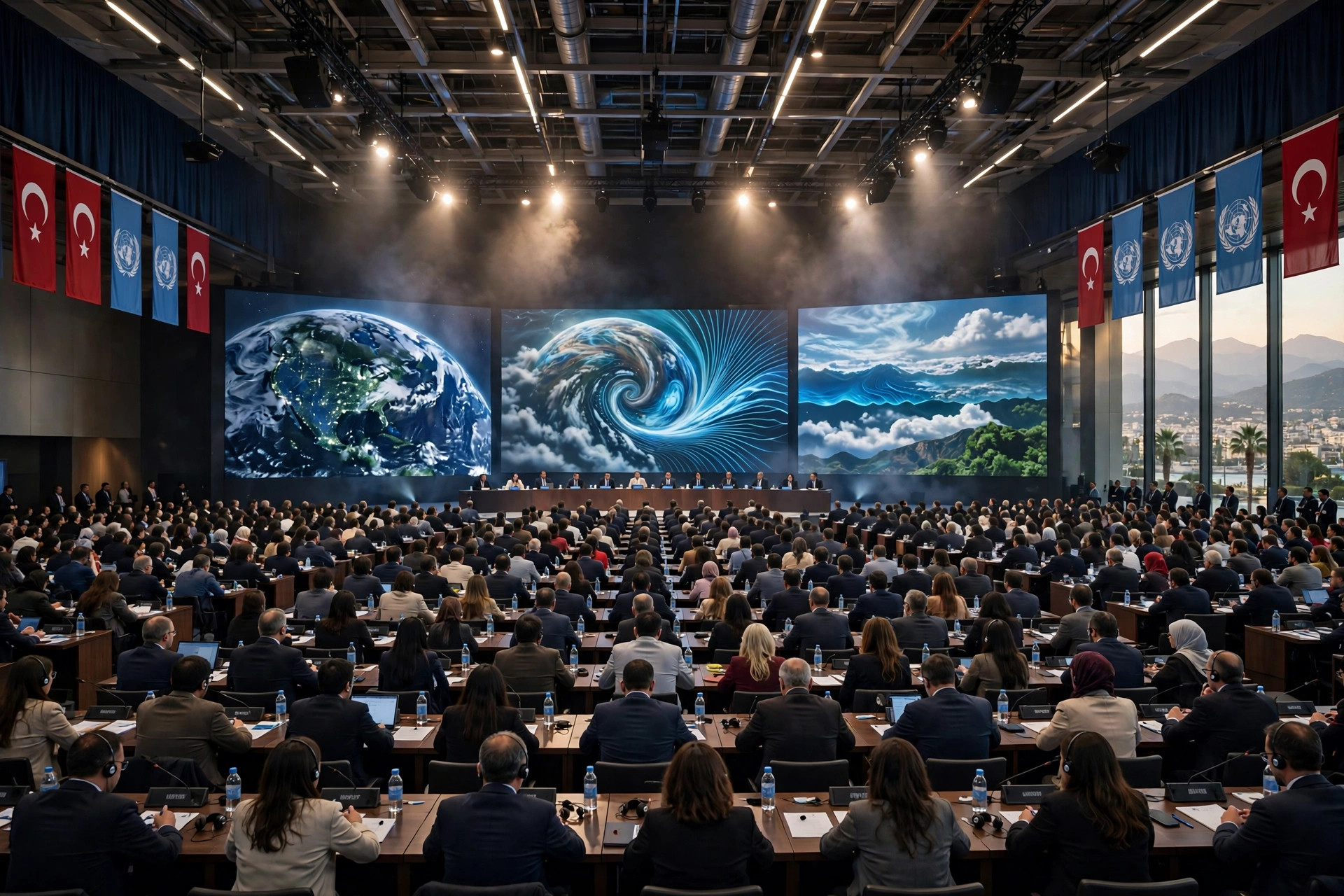
The COP31 climate summit has run into overtime in Antalya, Turkiye, after nearly 200 countries failed to agree a final deal by Friday’s scheduled close — with the latest draft text silent on fossil fuels, the main driver of climate change.
Negotiators spent two weeks in the Turkish Mediterranean city trying to bridge their differences, but the closing plenary was suspended late on Friday night with the summit’s most politically contentious issues still unresolved. A third draft of the final agreement is expected on Saturday morning, and talks are set to continue into the weekend.
Talks miss Friday deadline
The summit had been due to end on Friday, 20 November. Instead, the closing plenary was suspended at 10:29pm local time, with negotiations expected to resume on Saturday, according to reports from the talks.
COP31 President Murat Kurum, Turkiye’s environment minister, told delegates that a third version of the proposed cover decision would be delivered on Saturday after overnight consultations. “We won’t be leaving the rooms of Antalya until we have that consensus,” he said.
Brazil’s national secretary for climate change, Aloisio Lopes Pereira de Melo, summed up the mood bluntly: “At this point, no one is happy.”
Fossil fuels disappear from the draft
The deadlock centres on fossil fuels. An opening draft from co-host and lead negotiator Australia, published on Monday, called for a faster phase-out of coal, oil and gas. A slimmer version issued on Thursday removed every mention of them after Saudi Arabia and other major oil and gas producers objected.
The revised text was cut from 144 paragraphs to 80, and it also dropped a proposed target of $120 billion a year in adaptation finance for developing countries by 2035, replacing it with a call for further discussion about tripling adaptation finance.
The European Union warned the draft “risks turning this climate COP into a fossil summit”. Eight countries called for a reference to “a clear transition away from fossil fuels” to be restored, while a group led by France and Panama pressed the presidency for a far stronger agreement, setting out six priorities including an explicit shift away from fossil fuels, fairer climate finance and faster cuts in methane.
The draft still proposes raising electricity to 35 per cent of global final energy use by 2035, up from about a fifth today. But it does not say the extra power must come from renewable sources, leaving fossil-fuel plants able to count towards the target. It also gives prominent backing to carbon capture and storage, which several delegations criticised as costly and unproven at scale, warning it could be used to justify continued oil and gas production.
A landmark admission on 1.5°C
The draft would be the first COP cover decision to acknowledge that warming is set to pass the Paris Agreement’s 1.5 degrees Celsius limit, while calling for any overshoot to be kept as small and as short as possible.
What happens next
Australian Climate Minister Chris Bowen, who is chairing the negotiations, told reporters that “electrification is the key to transitioning away from fossil fuels”, and said he would work over the “coming hours, for as long as it takes, to get the job done”.
Some decisions have already been deferred to next year. Ethiopia was confirmed as host of COP32 in 2027, with its capital, Addis Ababa, selected as the host city.
Related coverage on TrendWire
Tags: #COP31 #ClimateSummit #FossilFuels #Antalya #ClimateFinance #UN #ClimateAction #GlobalWarming
Comments (0)