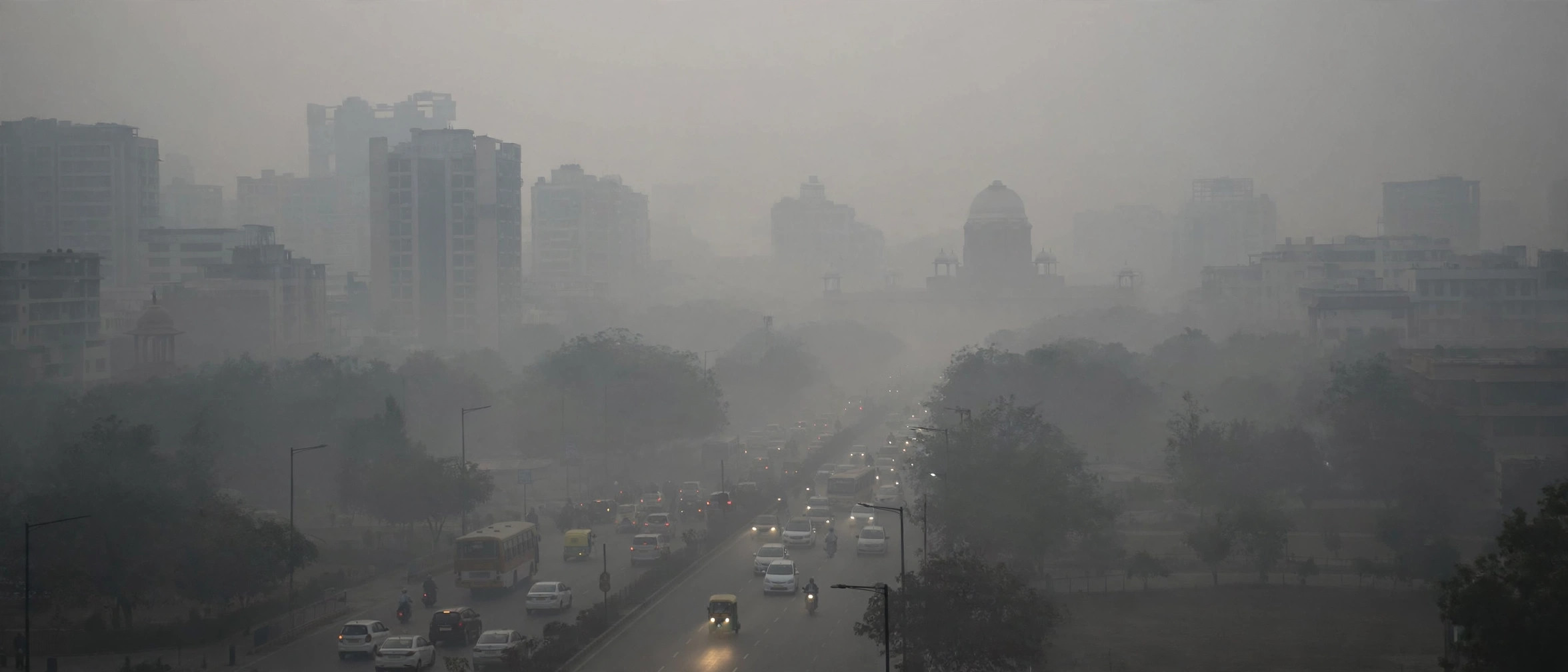
New Delhi: India’s capital overtook Lahore on Friday to become the world’s most polluted major city, as a thick blanket of smog reduced visibility and pushed air quality into hazardous territory across the metropolis of 20 million people.
According to Swiss air quality monitoring group IQAir, Delhi’s air quality index (AQI) reached 334, placing it at the top of its global ranking of major cities. India’s official Central Pollution Control Board (CPCB) recorded an even higher figure of 403, rating the capital’s air as “severe” — the first time Delhi has entered the severe category this season.
Delhi AQI hits severe as smog blankets the capital
The CPCB’s Sameer app showed the city’s average AQI at 403 at 6.05am, and the reading remained unchanged at 8am and 9am, according to reports. An AQI reading of up to 50 is considered good, with little or no health risk, while readings between 301 and 500 are classified as hazardous on the IQAir scale.
By later in the morning, IQAir’s hourly data showed some improvement, with Delhi’s AQI easing to 208, while Lahore slipped to seventh place among the world’s most polluted major cities with an AQI of 155. Lahore had held the top spot for several consecutive days before Friday’s shift.
Why Delhi’s air turns toxic every winter
Delhi’s pollution crisis intensifies with the onset of winter, when a temperature inversion traps pollutants close to the ground. A report by the Hindustan Times, citing official pollution and weather data, found that Delhi’s mixing layer — the band of air in which pollutants disperse — had contracted to around 400 metres on Thursday, compared with approximately 1,400 metres just two days earlier.
Source-apportionment estimates from the Indian Institute of Tropical Meteorology for November 12 identified biomass burning and secondary organic aerosols as the leading contributors to Delhi’s pollution load, each accounting for 25.4 per cent. The figures are estimates for a particular period and can shift with weather conditions, emission patterns and the movement of polluted air across regions.
GRAP Stage III curbs already in force
With air quality deteriorating, the Commission for Air Quality Management invoked Stage III of the Graded Response Action Plan (GRAP) across the National Capital Region on November 6, anticipating a further decline. Stage III corresponds to the “severe” AQI category, covering readings between 401 and 450, and brings restrictions aimed at cutting dust and emissions from construction and vehicles.
Health warning as study links PM2.5 to diabetes risk
The hazardous air carries a fresh health warning. A new umbrella review of 13 systematic reviews and meta-analyses, covering more than 200 million cumulative participant observations, linked long-term exposure to fine particulate matter (PM2.5) with a 10 to 16 per cent increased risk of developing Type 2 diabetes. The findings were published ahead of World Diabetes Day on November 14.
Health experts advise residents to limit outdoor activity, wear masks and use air purifiers when readings reach severe levels, with children, older people and those with respiratory conditions most at risk.
What happens next
Friday’s ranking is a snapshot of a single day, and the capital’s air quality can swing sharply with wind speed and temperature. For now, Delhi’s residents face another winter of hazardous air — and the annual debate over who bears responsibility for clearing it.
Related coverage on TrendWire
- COP31 Climate Summit Opens in Turkey Amid UN Extremes Warning
- October 2026 Warmest on Record as World Passes 1.5°C
- India Secures Access to EU's €93.5bn Horizon Europe Programme
Tags: #DelhiAirPollution #AQI #DelhiSmog #AirQuality #Lahore #IndiaEnvironment #PollutionCrisis #COP31
Comments (0)