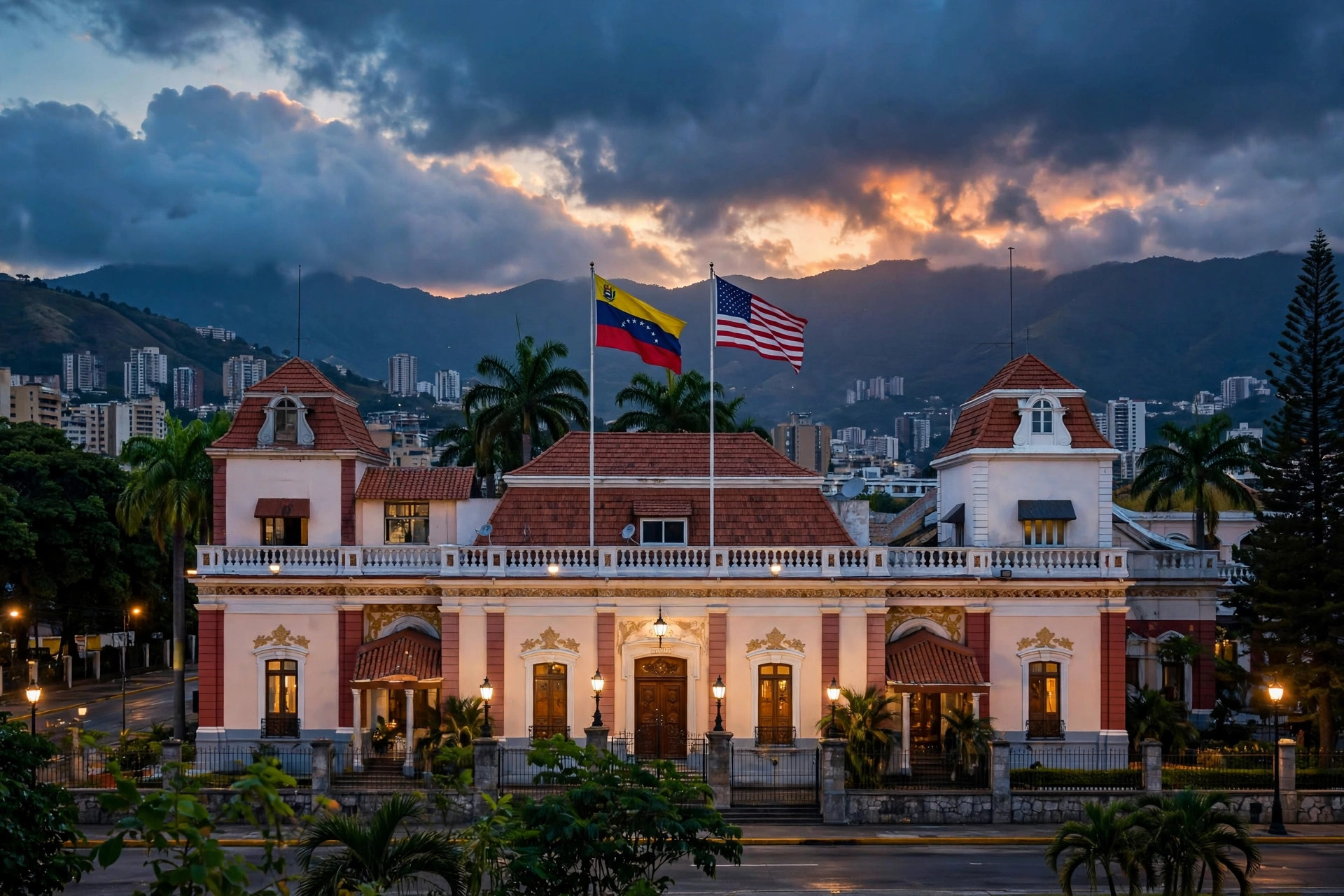
US Defence Secretary Pete Hegseth made an unannounced visit to Caracas on Wednesday and signed a military cooperation agreement with Venezuela, marking the highest-level American visit to the country since US special forces captured President Nicolás Maduro in a January raid.
The deal, signed at the Miraflores presidential palace alongside interim President Delcy Rodríguez, restores military ties between two countries that have been adversaries for two decades — and signals a dramatic thaw in a relationship long defined by sanctions and hostility.
What the US-Venezuela military deal covers
Hegseth signed the military-technical cooperation agreement with Venezuelan Defence Minister Gustavo González López in the Simón Bolívar Hall of the Miraflores Palace, in a ceremony broadcast live on state television. According to reports from the visit, the agreement covers joint training, intelligence sharing, and the supply of more defence equipment and capabilities to Venezuela's armed forces.
Rodríguez hailed the pact as a "resumption of the technical-military relationship between both countries" after years of rupture, adding that it would involve training for the National Bolivarian Armed Forces, the modernisation of operational equipment and access to new technologies.
Hegseth said Venezuela had gone from being America's "most aggressive regional threat" to a "compliant security partner" since Maduro's capture. Few further details were released, and the Pentagon has not yet published the text of the agreement.
A warning to drug traffickers
Announcing the partnership "against narco-terrorist and criminal enterprises", Hegseth issued a blunt warning to the region's drug cartels. "We will hunt you down, we will find you, and we will kill you," he said, adding: "You will no longer export your crime and your misery to America, to Venezuela, or any other country in the region."
The hard line comes as Washington expands its anti-drug operations across the Caribbean and Latin America. Hegseth has faced sustained scrutiny at home over the legality of deadly US strikes on suspected drug boats, and he recently survived a congressional impeachment vote.
Why the visit matters
The Caracas stop is the most striking sign yet of how far US-Venezuela relations have shifted since January. Hegseth is the latest member of President Donald Trump's cabinet to visit Venezuela this year, and his trip follows the US move to take control of some of the country's vast oil reserves — a deal Mr Trump said in August that Hegseth helped to broker.
The military-technical relationship being revived had been suspended since 2005, during the presidency of Hugo Chávez, leaving a 21-year gap that both governments now appear keen to close.
What happens next
Later on Wednesday, Hegseth flew on to Bogotá, where he was greeted by Colombia's defence and foreign ministers and handed over a C-130 Hercules transport aircraft, as Washington deepens security cooperation across the region.
The visit also comes two weeks after voter anger over the Iran war helped drive an election defeat for Mr Trump's Republican Party in Congress, adding political pressure on an administration keen to show results from its Latin America strategy. Whether the Caracas agreement produces concrete joint operations — or simply cements a new political alignment — will become clearer in the weeks ahead.
Related coverage on TrendWire
- US Details $12bn in Venezuelan Oil Revenue After Maduro Ouster
- Colombia Drone Attack Kills Three Soldiers at Army Base
- Felix Gallardo Dies at 80: Guadalajara Cartel Founder
Tags: #Hegseth #Venezuela #Caracas #USVenezuela #MilitaryDeal #DrugTrafficking #LatinAmerica #Maduro
Comments (0)