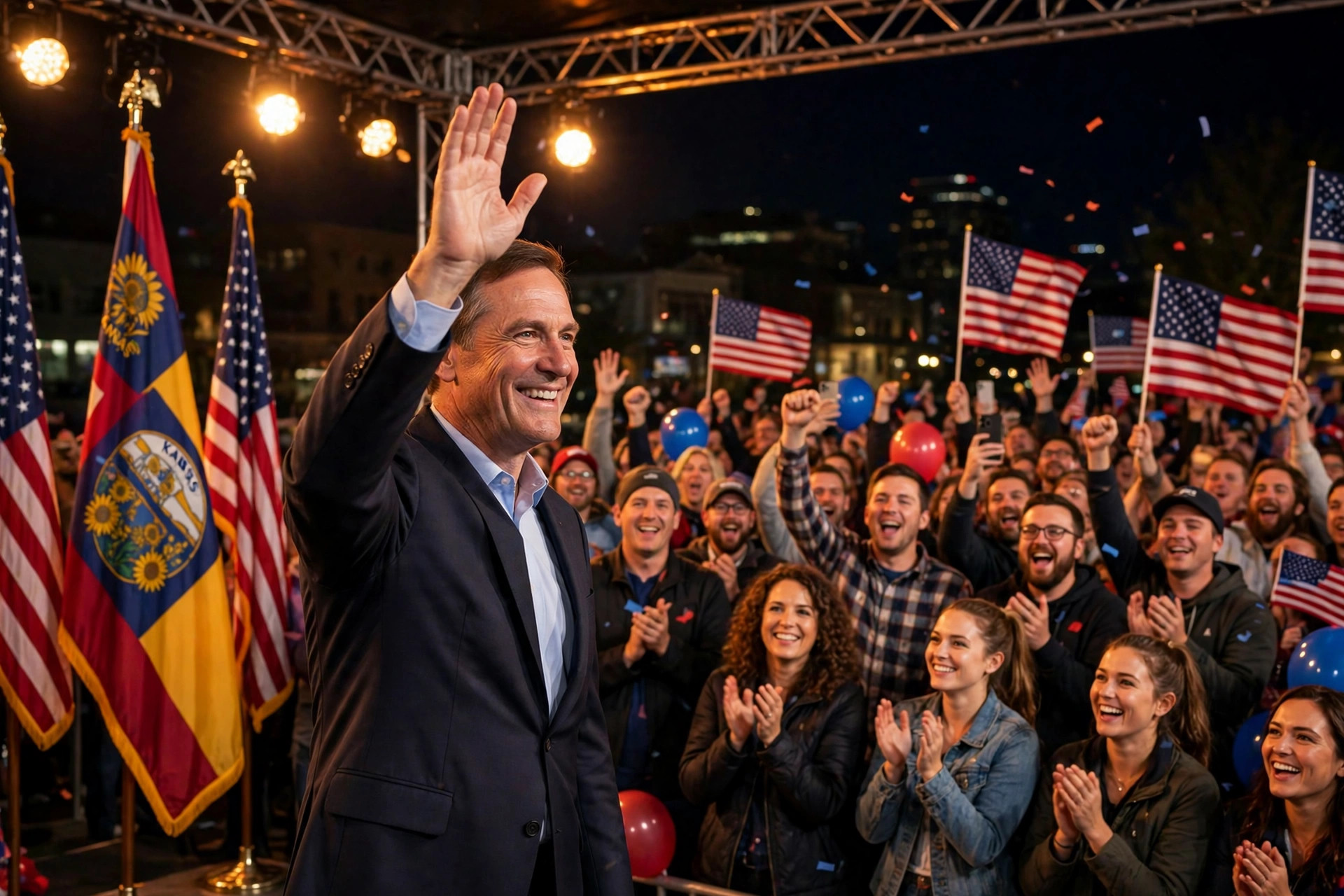
Democrat Cindy Holscher has been elected the next governor of Kansas, defeating Republican Ty Masterson in the closest governor’s race in the state since 1974.
The Associated Press called the race for Holscher on Thursday, more than a week after voters went to the polls. According to figures reported by KCTV, she won just over 551,000 votes and led by more than 7,000, a margin of 0.7 percentage points; MultiState put her share at 50.4 per cent. Masterson conceded the same day.
Holscher defeats Masterson in closest Kansas race since 1974
Holscher, 57, is a Democratic state senator from Overland Park who has served in the Kansas legislature since 2017. She will succeed Governor Laura Kelly, a Democrat who was term-limited after eight years in office. Holscher takes office on 11 January 2027.
Masterson, also 57, is president of the Republican-controlled state Senate and carried President Donald Trump’s endorsement. Kansas was widely seen as the most competitive of the 36 governor’s races, and the contest most likely to flip from Democratic to Republican control. Holscher’s victory means Democrats now hold a majority of governorships in the United States for the first time in two decades, the Associated Press reported.
“It’s the honor of a lifetime to serve as your next Governor,” Holscher wrote on X after the race was called on Thursday night.
Data centres became the defining issue in Kansas
Holscher built her campaign around a promise to halt new data centres, tapping into local anger over the cost and scale of the artificial intelligence building boom. Kansas has become a destination for data-centre investment, with about $46 billion in announced projects, mainly in the Kansas City area, as part of a growing Midwestern technology hub sometimes called the Silicon Prairie.
Holscher made the moratorium a central plank of her campaign, linking concern over energy prices and big technology companies to a populist message against what she called “sweetheart deals” for billionaires, Reuters reported. She won despite the state’s largest transit and railroad union, as well as a local chapter of the IBEW electrical workers union, backing her opponent over the issue.
Republicans outspent Democrats on advertising by nearly three to one, according to AdImpact figures cited by NBC News, yet Holscher still prevailed, taking more than 60 per cent of the vote in her home Johnson County to offset Masterson’s large margins in solidly Republican rural areas.
A wider Democratic wave across Kansas
Holscher’s win was part of a broader Democratic sweep in a state that usually votes Republican in federal elections. Kansas also elected a Democrat to the US Senate for the first time since 1932, choosing pastor Adam Hamilton over incumbent Republican Roger Marshall.
Democrats also flipped the attorney general’s office, with Chris Mann beating incumbent Kris Kobach, while Holscher’s running mate K.C. Ohaebosim became the first Black statewide elected official in Kansas since 1887. Together, Democrats won four statewide contests in Kansas for the first time since 1958.
What the result means for the data-centre debate
The result is being read nationally as a warning for the technology industry: Reuters called it another example of a candidate tapping into popular anger over data centres and big tech, especially in rural areas.
What happens next for Kansas
Holscher will spend the coming weeks assembling her administration before taking office in January. Her first test will be delivering the data-centre moratorium in a state where the legislature remains heavily Republican and Masterson remains the Senate’s top Republican leader. The narrow margin also triggered a state-required post-election audit.
Related coverage on TrendWire
- Van Hollen Challenges Schumer for Senate Democratic Leader
- Tesla and SpaceX Lose $420 Billion After Midterm Rout
- Pentagon to Hold Minab School Strike Report Until After US Midterms
Tags: #Kansas #CindyHolscher #KansasGovernor #USMidterms2026 #Democrats #DataCentres #TyMasterson #Election2026
Comments (0)