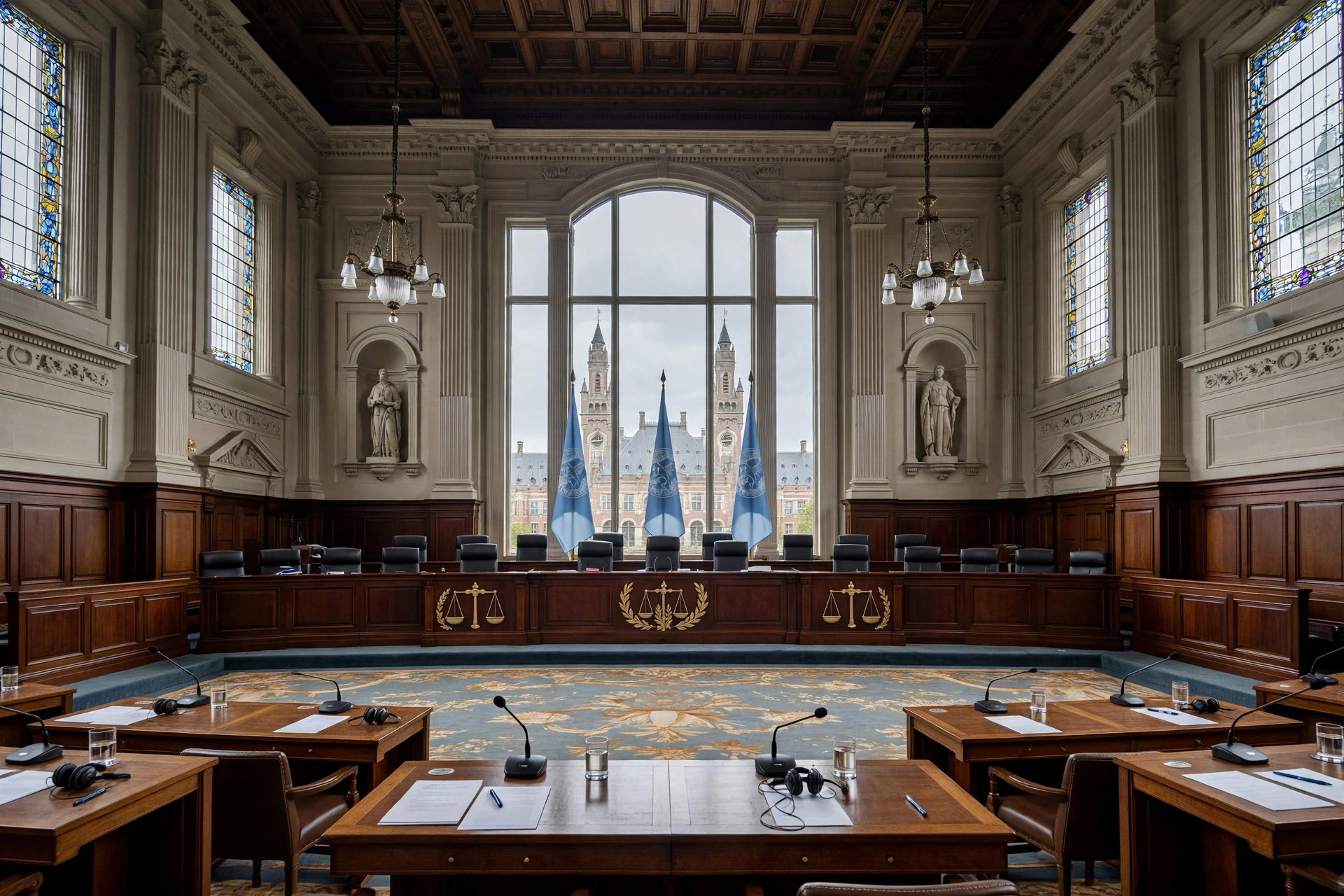
The United Nations' highest court has ruled that Myanmar committed genocide against its Rohingya minority, in a landmark judgment that marks the first time the International Court of Justice (ICJ) has found a state responsible for the crime.
Delivering the judgment at the Peace Palace in The Hague on Thursday, ICJ President Yuji Iwasawa said Myanmar's security forces killed thousands of Rohingya civilians, carried out widespread sexual violence and subjected children to extreme violence during military operations in 2017. The court found that the evidence showed the forces acted with the intent to destroy a "substantial part" of the Rohingya population.
ICJ finds genocidal intent in 2017 crackdown
According to the court, the "only reasonable inference" from the evidence of widespread atrocities was that Myanmar's forces acted with genocidal intent. The ruling is only the fourth time since the Holocaust that an international court has found the legal threshold for genocide to have been met.
The court heard that evidence showed Myanmar forces killed about 10,000 Rohingya during the 2017 "clearance operations" in Rakhine State, carried out indiscriminate killings, separated and executed men, and systematically burned villages. Around 815,000 Rohingya lived in northern Rakhine State before the August 2017 operations, the court said, describing the targeted population as clearly significant and substantial under the Genocide Convention.
The judgment, read out over roughly three hours, also ordered Myanmar to allow the safe return of the Rohingya to their places of residence and to allow the reunification of families. At least 730,000 Rohingya fled to neighbouring Bangladesh during the crackdown, and about 1.2 million now live in the sprawling Cox's Bazar refugee settlement.
Seven-year case brought by The Gambia
The case was filed in November 2019 by The Gambia, which accused Myanmar of breaching the 1948 Genocide Convention through mass killings, sexual violence and the destruction of Rohingya villages. Hearings on the merits of the case were held in January 2026, and the judgment was delivered by a panel of 15 elected judges alongside two ad hoc judges appointed for the case.
The court acknowledged that the Arakan Rohingya Salvation Army had attacked security outposts and civilians, including by burning villages. Myanmar has denied committing genocide and says its forces were responding legitimately to attacks by armed groups. The court nevertheless found that the scale and pattern of the military's response met the legal test for genocide, a crime that requires proof of a specific intent to destroy a group in whole or in part.
What the ruling can — and cannot — do
The ICJ's rulings are final and legally binding, but the court has no police power of its own. Its only route to enforcement is to report non-compliance to the UN Security Council, leaving the judgment's practical force dependent on what states and UN bodies do next.
For the Rohingya refugees watching the ruling on screens in Cox's Bazar, the judgment offers formal legal recognition of atrocities documented for nearly a decade. Whether it leads to safe returns, accountability for those responsible or reparations will depend on pressure from the international community in the months ahead.
Related coverage on TrendWire
Tags: #ICJ #Myanmar #Rohingya #Genocide #TheGambia #TheHague #WorldCourt #HumanRights
Comments (0)