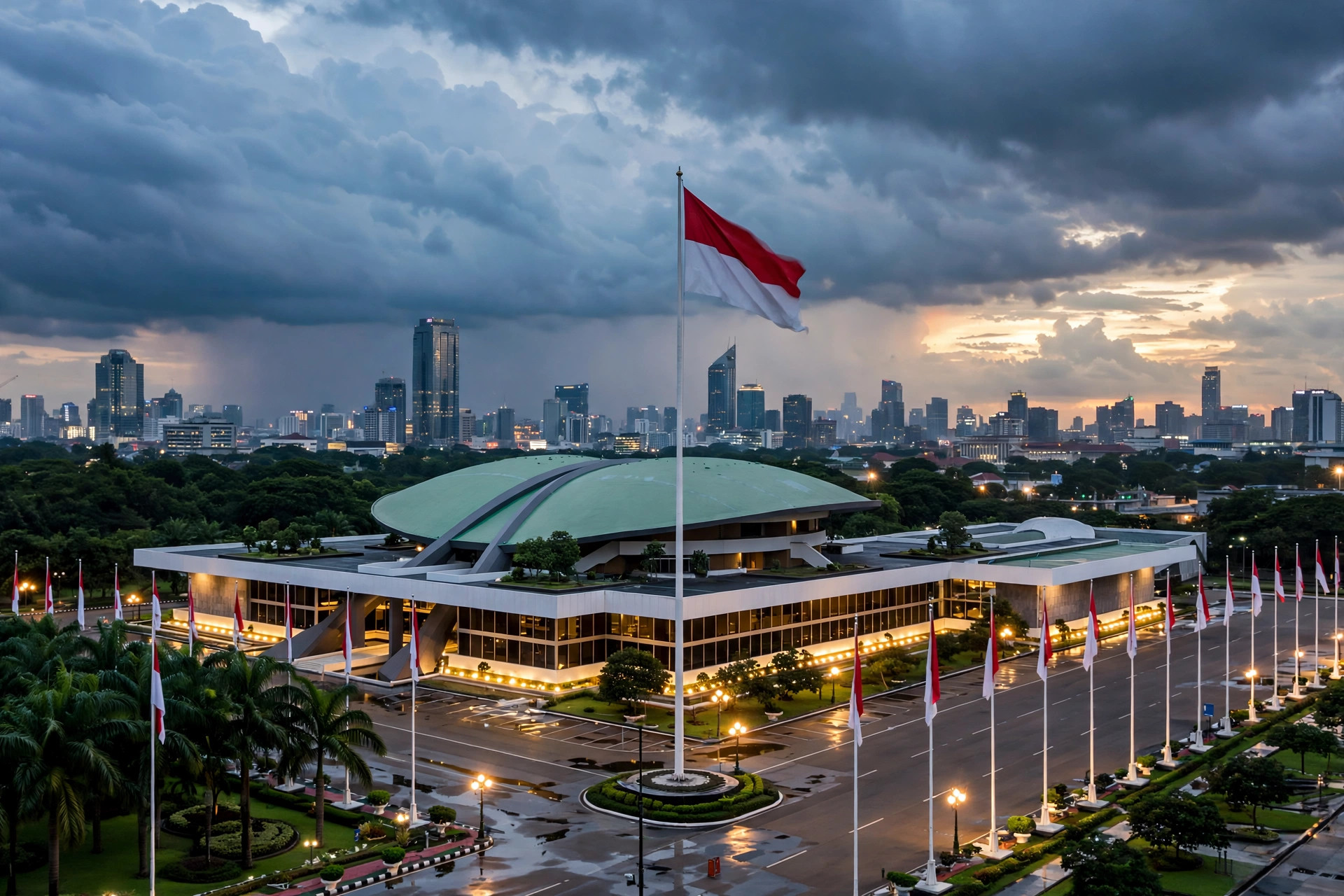
Indonesia's Vice President Gibran Rakabuming Raka has formally resigned, ending days of speculation about his political future. The 39-year-old, the eldest son of former president Joko Widodo, handed his resignation letter to the People's Consultative Assembly (MPR) in Jakarta on Thursday, 12 November 2026.
President Prabowo said he had accepted the resignation "with a heavy heart" and praised Gibran as being "of great help to me". Gibran bowed and hugged Prabowo after the announcement, then left the presidential palace without speaking to reporters.
Resignation handed to parliament
Gibran arrived at the MPR building in central Jakarta on Thursday morning and met assembly leaders for about 20 minutes behind closed doors before handing over the letter, MPR Speaker Ahmad Muzani confirmed. He also submitted a similar letter to President Prabowo.
Reading from the five-paragraph letter, Muzani said Gibran had made his decision "through my own volition … for the interests of the government and nation". Senior law minister Yusril Ihza Mahendra said Gibran had quit for personal reasons and cited "growing public sentiment".
The education credentials dispute
At the heart of the crisis is a dispute over whether Gibran's overseas schooling met the legal requirements to stand for vice president. Indonesian law requires a candidate to have completed senior secondary schooling or an equivalent qualification.
Last month, two courts delivered findings against him. The Constitutional Court dismissed a challenge to his eligibility on procedural grounds, but said the proceedings had produced no convincing evidence that he held a foreign diploma equivalent to senior high school completion. On 30 October, the Supreme Court annulled a 2019 Education Ministry certificate that had treated his schooling abroad as equivalent to an Indonesian senior high school diploma.
Gibran, who studied in Singapore and Australia, had maintained that his university degree was adequate evidence of senior secondary completion, and he had sought a chance to prove his documents at the State Administrative Court.
Pressure escalated on Wednesday, when around 120 lawmakers from eight political parties submitted a formal petition questioning whether Gibran could constitutionally remain in office — the first step in a process that could have led to his impeachment, which in Indonesia runs through parliament, the Constitutional Court and finally the MPR.
A fraying Prabowo–Jokowi alliance
Gibran's departure marks the symbolic end of the alliance between Prabowo and his predecessor, Joko Widodo, known as Jokowi, whose tacit backing helped Prabowo win the 2024 election by a wide margin with Gibran as his running mate.
The partnership was controversial from the start. Gibran qualified for the ticket only after a 2023 Constitutional Court ruling on age limits, issued while his uncle led the court, allowed him to run despite being 36, below the minimum age of 40. Jokowi was accused of meddling in the process by influencing that court decision.
Yet Jokowi moved quickly to steady the relationship. Speaking outside his home in Solo, central Java, shortly after his son's resignation, the former president said: "We will continue to support President Prabowo's administration, especially programmes that serve the interests of the broader public."
What happens next
Under Indonesia's constitution, the vice presidency does not pass automatically to a successor: the MPR must elect a new vice president from two candidates proposed by the president. The assembly plans to meet on Friday to request the two nominees from Prabowo, and it must choose a successor within 60 days — a choice that will reshape the succession picture ahead of the 2029 election.
Prabowo urged Indonesians to remain calm and vigilant against attempts to divide the nation, as the country watches to see who he nominates.
Related coverage on TrendWire
Tags: #Indonesia #GibranRakabumingRaka #PrabowoSubianto #JokoWidodo #SoutheastAsia #IndonesiaPolitics #Jakarta #MPR
Comments (0)