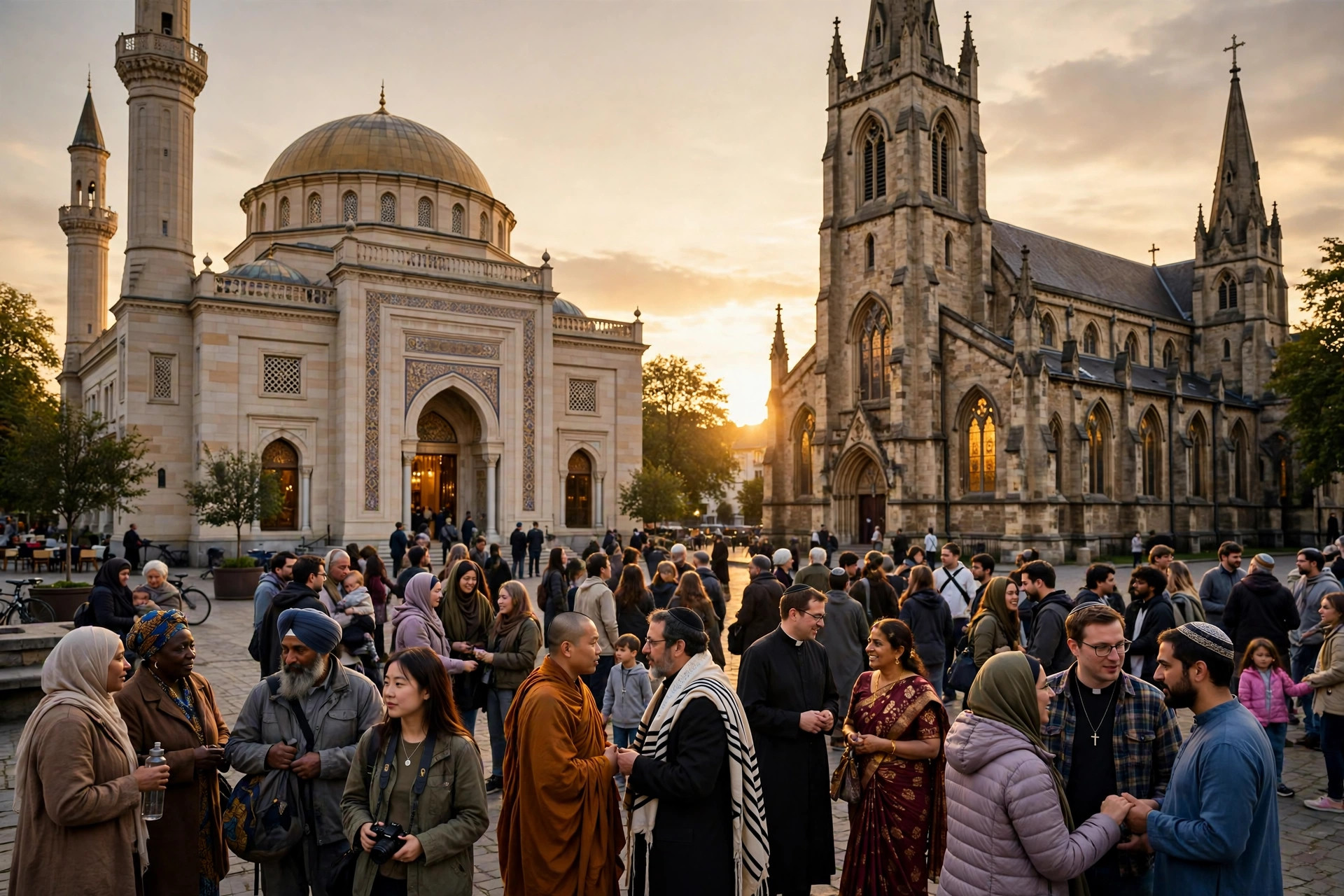
Islam is on course to overtake Christianity as the world’s largest religion by 2035, according to detailed new projections released on Wednesday by the Pew Research Center. The landmark study, reported by the Associated Press, finds that both faiths are still growing — but Islam is growing far faster, driven mainly by higher birth rates and a younger population.
Islam Largest Religion by 2035: What Pew Projects
According to Pew’s latest estimates, there were 2.27 billion Christians and 2.02 billion Muslims worldwide in 2020. The new projections forecast that by 2035 there will be 2.57 billion Muslims and 2.52 billion Christians, putting Islam ahead for the first time in recorded history. If recent trends continue, the gap widens further: by 2070, Pew projects more than 3.6 billion Muslims and just under three billion Christians worldwide.
The research is part of the Pew-Templeton Global Religious Futures Project, which examined 201 countries and territories covering 99.98 per cent of the world’s population, tracking seven religious groups and affiliations from 2020 to 2070. Pew has been publishing authoritative reports on religious demography for 25 years.
Why Islam Is Growing Faster
A key reason, Pew said, is that Muslims tend to have more children than other major religious groups. During 2020–2025, the fertility rate for Muslims was 3.1 children per woman, compared with 2.5 for Christians. According to Pew’s estimates, Muslim women gave birth to more babies than women in any other religion during that period.
The projections take into account recent differences between religious groups’ age profiles, fertility rates, and patterns of religious switching and migration. Muslims are, on average, younger than Christians, which means more women of childbearing age and more births in the years ahead. Pew reported that Christians are growing at a rate of around 30 per cent over the projection period, while Muslims are growing at around 80 per cent.
Other faiths in the projections
The study also suggests that the populations of Hindus and Jews, although growing in absolute numbers, will eventually slow down. By 2070, Christians will no longer be the majority religious group in the United States, according to the projections reported by Times Now.
What the Projections Do Not Claim
Pew was careful to stress the limits of its work. The organisation said the findings are “not intended to predict all the ways the world could change”, noting that events such as socioeconomic shifts, natural disasters and wars could affect a group’s religious affiliation. The projections are based on current demographic trends continuing, not on a forecast of future conversions or political change.
Senior demographer Conrad Hackett, who led the research, has previously noted that fertility and age structure — rather than switching between faiths — are the main forces reshaping the world’s religious map.
What Happens Next
The full Pew report, with country-by-country breakdowns for 2020–2070, is now available from the Pew Research Center, and analysts expect its findings to shape debate about migration, education and religious life in the decades ahead. For now, the headline is clear: within a decade, the world’s largest faith will change — and, on current trends, it will stay changed.
Related coverage on TrendWire
Tags: #Islam #PewResearch #WorldReligion #Christianity #ReligiousDemographics #GlobalPopulation #Faith #Demographics
Comments (0)