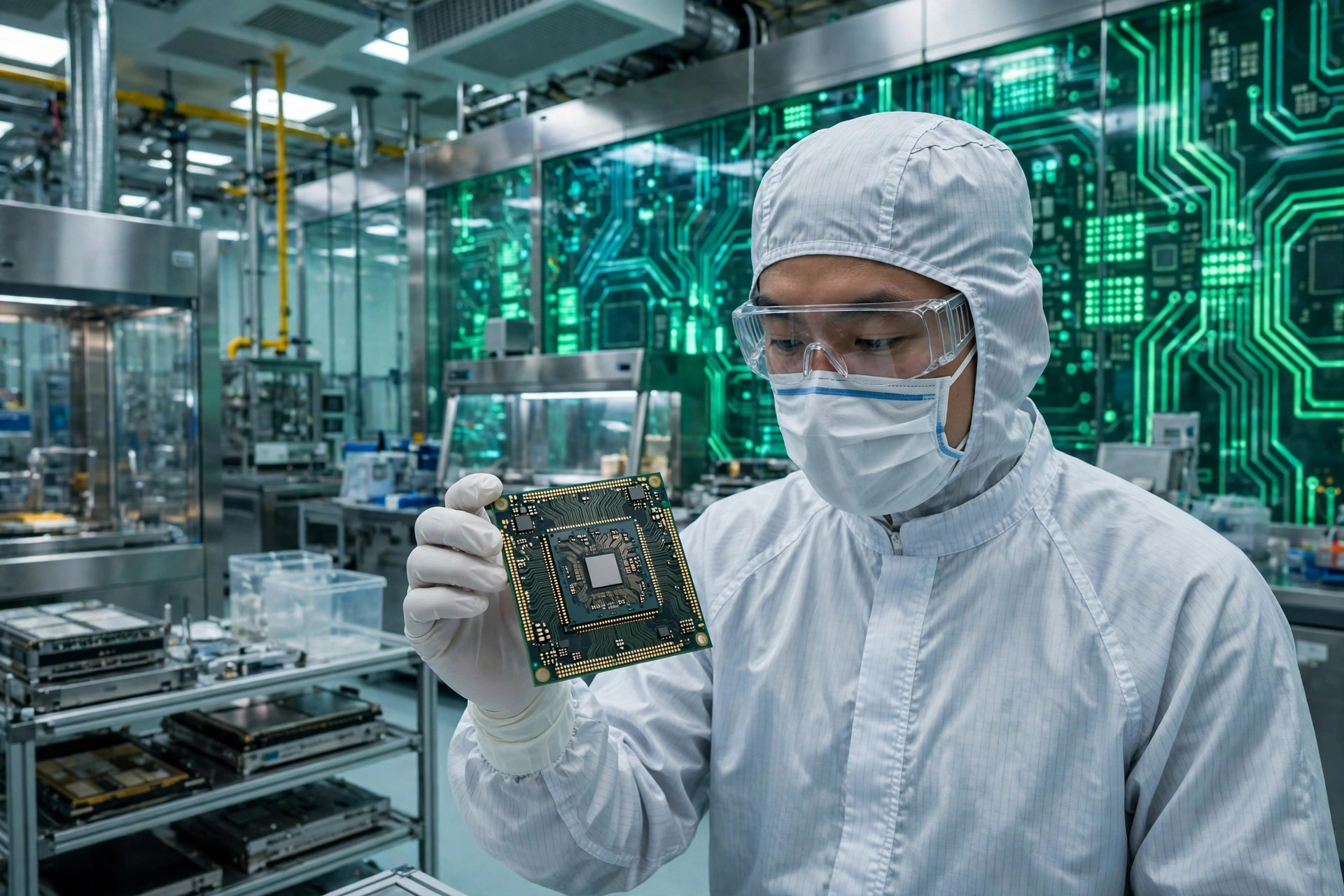
Nvidia will stop selling its H200 artificial intelligence chips to China, interim chief executive Colette Kress has announced, ending one of the most controversial arrangements in the global chip trade and drawing a sharp line under the era of co-founder Jensen Huang.
The decision, announced on Tuesday on Nvidia's first earnings call since Huang stepped down, reverses a deal Huang struck with President Donald Trump that allowed the advanced processors to reach Chinese buyers through the United States, with Washington collecting a 25 per cent tariff on each shipment.
Kress Ends the H200 Deal on Her First Earnings Call
According to TechCrunch, Kress told investors that Nvidia will no longer sell H200 chips in China, closing the company's participation in what critics called a loophole in the US ban on advanced chip sales to the country. In an interview with CNBC's Jim Cramer after the call, she went further, saying: "And we are no longer shipping H200 at all, let alone not shipping it to China."
The announcement came on the same day Nvidia reported record third-quarter revenue of $115.8 billion, up 103 per cent from a year earlier. Yet the company's outlook for the current quarter assumes no data centre compute revenue from China at all — a striking admission for a business that sold about $2.4 billion of approved Hopper products to Chinese customers in the quarter just ended.
Nvidia also announced that its board has created a committee to oversee national security policy, export control compliance and global trade risks, meeting at least quarterly. Huang stepped down on 12 November after 33 years at the helm, and the board has since ruled out his return as chief executive.
Washington Tightens the Rules on Remote Access
The H200 halt follows new export rules issued on Monday by the US Commerce Department's Bureau of Industry and Security, aimed at closing a workaround that let Chinese firms rent computing power on Nvidia chips housed in data centres abroad. Under the interim rule, operators in countries including Singapore, Malaysia, Thailand, Indonesia and Brazil must obtain a US licence before supplying advanced AI chips to facilities serving Chinese customers remotely.
China's Ministry of Commerce has opposed the rule and threatened countermeasures, according to reports. Export control attorney Dan Fisher-Owens told TechCrunch that large AI training facilities will now face a choice: certify they serve no Chinese users, or abandon Nvidia chips for competing options.
What It Means for Nvidia — and for China
Investment bank Jefferies estimates the new export rules could trim between $44 billion and $62 billion from Nvidia's data centre revenue next year. Kress pushed back on that concern, telling investors that the backlog of demand for advanced chips such as Vera Rubin means the rules would have minimal near-term impact on the company's top line.
The politics remain live. Trump told Fox News this week that he referred to Huang's situation "briefly" during talks with Chinese President Xi Jinping in Shenzhen, saying: "We did not discuss it. I might have referred to it just briefly because it's such a tragedy. He's such a brilliant man." Huang resigned after revelations about extramarital affairs, including with Chinese businesswoman Alice Huang, and US intelligence is reported to be examining her ties to China's security ministry.
For China's AI labs, the door is now closing on every authorised route to Nvidia's most powerful accelerators. Washington already bans exports of the newer Blackwell and Rubin architectures to mainland entities — and with the H200 gone too, Beijing's developers must rely on domestic chips or find new workarounds faster than regulators can close them.
Related coverage on TrendWire
- Jensen Huang Steps Down as Nvidia CEO After 33 Years
- Nvidia Chip Loophole Gives China Access to US AI Chips
- Nasdaq Enters Correction as Nvidia-Led AI Sell-Off Deepens
Tags: #Nvidia #H200 #China #ExportControls #AIChips #JensenHuang #ColetteKress #Semiconductors
Comments (0)