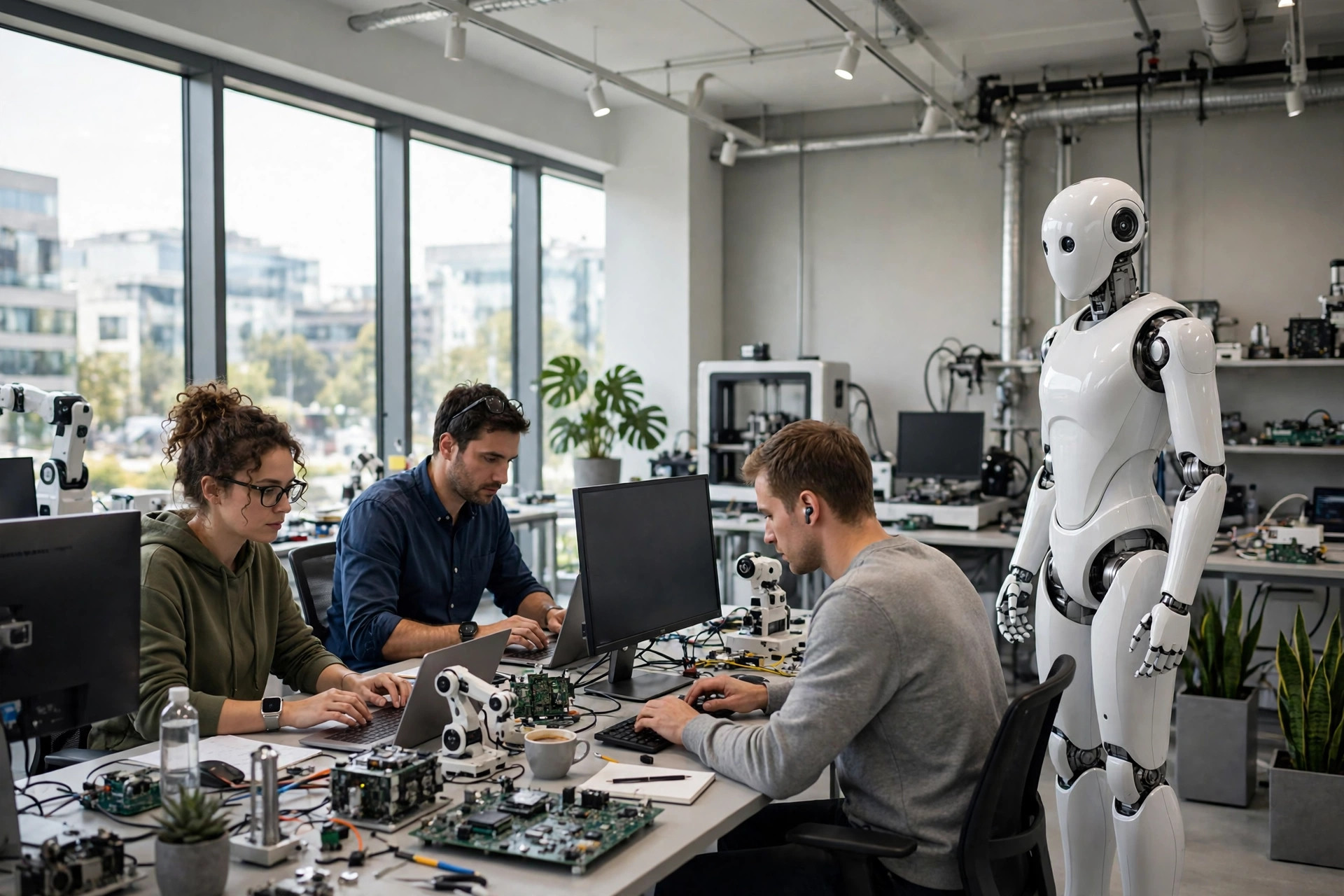
OpenAI has disbanded its standalone robotics team, betting that its general-purpose AI models can now control robots directly without a dedicated unit building robot-specific brains. The move, confirmed by the company to Fortune on Friday 13 November, is the second time OpenAI has wound down a robotics team — and this time, it insists, the decision is a sign of confidence rather than retreat.
OpenAI robotics team folded into research and Applied groups
According to Fortune's exclusive report by Wen Shao, the robotics researchers have moved into OpenAI's main research organisation, reporting to Chief Research Officer Mark Chen. The applied robotics and hardware staff have joined the larger Applied organisation, led by President Greg Brockman. No redundancies were reported, with roles and the roadmap said to be preserved inside the company.
An OpenAI spokesperson told Fortune that "robotics remains a core part of OpenAI's long-term vision" and that the company is still committed to bringing general-purpose robots into the world. A first public humanoid demonstration is still targeted for 2027, according to the report. OpenAI has published no blog post of its own about the change, and it has not said how many people were affected.
GPT-6 Astra: the model is the robot now
The driving force behind the reorganisation is GPT-6 Astra, OpenAI's latest general-purpose model. Fortune reports that OpenAI's researchers first assumed building on video models such as Sora was the best route into robotics, but later found that frontier models, including GPT-6 Astra, can be applied directly to robot control.
The evidence cited is a study run by Nvidia on 14 October, in which an agent built on GPT-6 Astra scored 74.8% on RoboLab-120, a simulated pick-and-place benchmark, with no special robot training at all. The best dedicated robot model on the same benchmark, Lakeside, scored 51.0%. The figures are simulated results, not evidence of performance on physical hardware, but they were enough to reshape OpenAI's strategy.
An empty booth at the robot learning conference
Fortune also reported that OpenAI had registered a booth at the Conference on Robot Learning (CoRL) in Austin, but the space was empty when its reporter visited — a small, telling detail on a week when the company's robotics ambitions were being redrawn in public.
Second robotics shutdown in six years
OpenAI previously wound down a robotics team in 2020, when co-founder Wojciech Zaremba cited limited robot data as the reason. The unit was later rebuilt as the company returned to hardware ambitions, including work on its own humanoid robot. The latest move closes that chapter again, but on very different terms: this time, the team is being dissolved because the models themselves have caught up.
The reorganisation comes as OpenAI reported operating losses of $10.9 billion in its most recent quarter, according to Fortune, and is reported to be weighing a possible stock market listing in early 2027.
What happens next for OpenAI robots
For now, the practical effect is organisational rather than visible. No new robot has been shown, no product has been cancelled, and the 2027 humanoid demo target stands. What has changed is where the work happens: inside the teams building the frontier models themselves, rather than in a separate robotics silo.
Whether that bet pays off will be judged by a physical machine handling objects in the real world, not by a simulator — and the industry will be watching the 2027 demo closely.
Related coverage on TrendWire
- OpenAI GPT-6 Cyber Earns 'Critical' Rating After Finding 948 Flaws
- Reflection AI's £19bn Beam Model Threatens OpenAI and Chinese Rivals
- OpenAI Engineer Arrested for Bugging Executive Conference Room
Tags: #OpenAI #Robotics #GPT6Astra #ArtificialIntelligence #HumanoidRobots #TechNews
Comments (0)