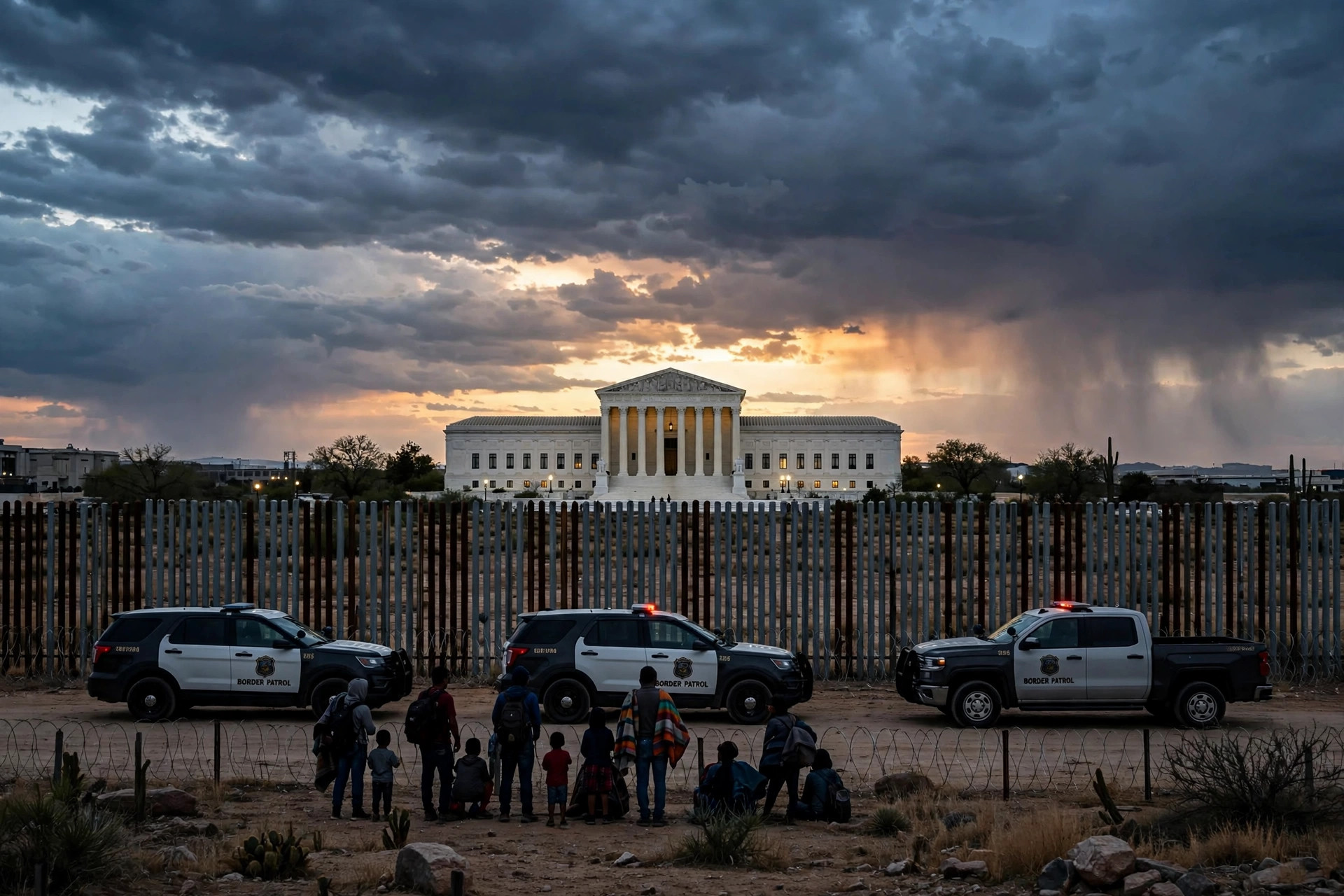
The United States Supreme Court has agreed to decide whether President Donald Trump can bar migrants from seeking asylum at the southern border, setting up one of the most consequential immigration rulings of his second term. The justices announced on Friday, 13 November 2026, that they will hear the Trump administration's appeal against lower court rulings that found the policy unlawful.
The case, Mullin v. Refugee and Immigrant Center for Education and Legal Services, centres on a proclamation Mr Trump signed within hours of returning to the White House on 20 January 2025. The order declared that an "invasion" was under way at the southern border and suspended the entry of certain migrants, including their ability to seek asylum and other forms of protection.
What the Supreme Court agreed to decide on the Trump asylum ban
The court granted review on two questions, according to SCOTUSblog and Reuters. First, whether Proclamation 10888 and its implementing guidance are lawful — specifically, whether the president has the power under Section 212(f) of the Immigration and Nationality Act to suspend entry and cut off asylum access for people crossing the southern border. Second, whether federal law bars the classwide relief a district court entered against the policy.
The justices declined to take up a third question from the government's petition, which challenged the definition of the certified class of affected migrants. The order gave no reasons, and legal analysts cautioned that the omission should not be read as a ruling on the class itself.
How the case reached the Supreme Court
The legal fight has run for nearly two years. A federal judge in Washington set the restrictions aside, and in April 2026 a divided three-judge panel of the US Court of Appeals for the District of Columbia Circuit upheld that decision, concluding that the administration lacked the authority to suspend access to asylum and introduce alternative removal procedures.
The full D.C. Circuit denied rehearing on 23 July 2026 and held its mandate while the government sought Supreme Court review. Solicitor General D. John Sauer filed the petition for certiorari on 24 August 2026, arguing that the president has broad authority to bar entry under federal immigration law.
The ban stays in force for now
Importantly, the Supreme Court's decision to hear the case changes nothing on the ground today. The asylum-related parts of the lower court judgment have been on hold since August 2025, so the restrictions remain in force while the justices consider the case, according to SCOTUSblog and the Associated Press.
Why the ruling matters beyond the border
The American Civil Liberties Union and allied groups, who brought the challenge on behalf of asylum seekers, argue the ban violates the Immigration and Nationality Act, which guarantees the right to seek asylum regardless of how a person enters the country. The administration counters that the president's power to suspend entry during a declared emergency is broad and largely beyond judicial second-guessing.
Legal experts say the ruling could shape how future presidents respond to unauthorised border crossings and define the limits of emergency executive action on immigration for years to come. The case also tests whether courts can block immigration enforcement policies on a classwide basis, a question with consequences well beyond this single policy.
What happens next
Oral arguments are expected in spring 2027, with a decision anticipated by the end of the court's term in late June 2027, according to Reuters and the ACLU. No argument date has yet been set, and briefing is still to be scheduled. Until then, migrants crossing the southern border between ports of entry remain unable to apply for asylum, and the administration's border policy continues as it has since the first day of Mr Trump's second term.
Related coverage on TrendWire
- Trump Approval Hits New Low of 32% in Post-Midterm Poll
- Trump, Xi and Putin to Hold Historic Three-Way Talks in Shenzhen
- Trump Warns Iran: 'No Hesitation' on Military Force Right Now
Tags: #SupremeCourt #TrumpAsylumBan #USImmigration #SouthernBorder #MullinVRAICES #ImmigrationLaw #TrumpAdministration
Comments (0)