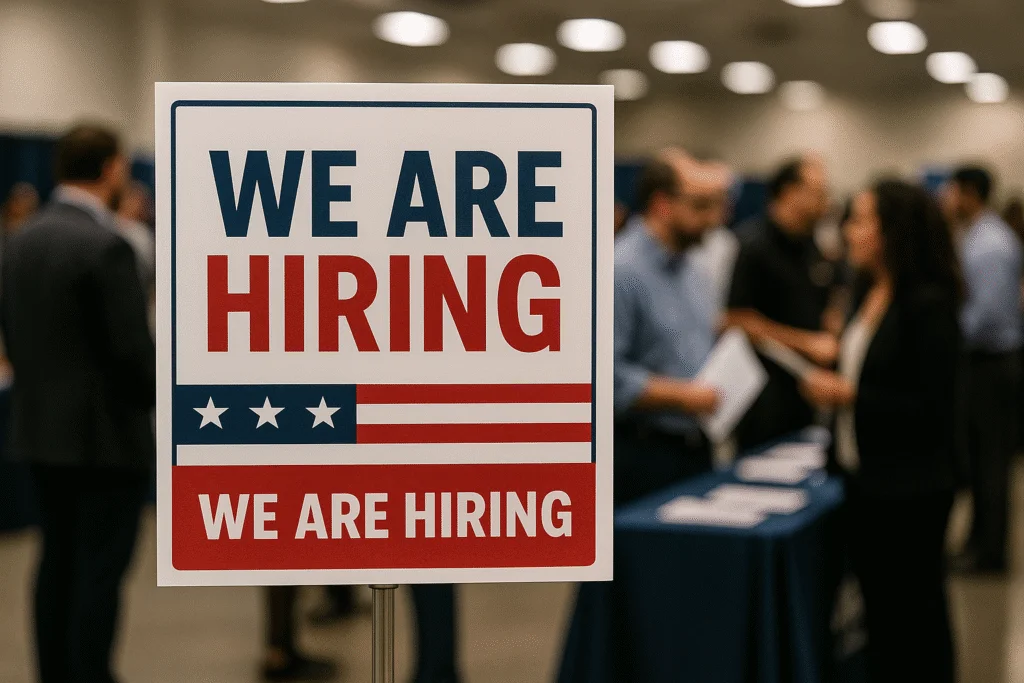
The United States labour market delivered a resounding surprise in October, adding 165,000 jobs — nearly three times the number economists had expected — as the unemployment rate edged down to 4.1%, according to the Bureau of Labor Statistics (BLS).
The report, published on Friday 6 November, suggests the jobs market is strengthening again after stumbling in mid-summer, and it has sharpened the debate over whether the Federal Reserve will raise interest rates at its final meeting of the year.
US Jobs Report Beats Forecasts by a Wide Margin
Economists polled by Reuters had forecast payrolls rising by just 65,000 in October, with estimates ranging from 35,000 to 125,000. The actual gain of 165,000 blew past even the top end of that range, and it was well above the average monthly gain of 48,000 recorded over the previous 12 months.
The BLS also revised earlier figures higher. September's gain was lifted from 29,000 to 60,000, while August's was raised from 133,000 to 186,000 — a combined upward revision of 84,000 jobs. The unemployment rate fell from 4.2% in September to 4.1%, defying expectations that it would hold steady, and it has now remained in a narrow range of 4.1% to 4.3% since March. According to Barron's, it is the 62nd consecutive month with the jobless rate below 5%.
Where the New Jobs Came From
October's gains were broad-based. Professional and business services led the way with 70,000 new jobs, well above its average monthly gain of 15,000 over the prior 12 months, according to the BLS. Health care added 42,000 jobs, while transportation and warehousing added around 25,000. Manufacturing employment rose by 19,000.
Pay also picked up. Average hourly earnings rose 14 cents to $38.00, a 0.4% increase on the month and 3.1% higher than a year earlier, beating expectations. The number of unemployed people stood at 7.1 million, little changed from September, even though 421,000 people entered the labour force during the month.
Some Softer Spots Beneath the Headline
Not every measure improved. The broader U-6 unemployment rate, which includes people marginally attached to the labour force and those working part-time for economic reasons, rose to 7.9% from 7.6%. And while the jobless rate fell, the typical length of unemployment rose to 11.9 weeks, a sign that those without work are still finding it difficult to land a new job, according to Appcast chief economist Andrew Flowers.
What the Jobs Report Means for the Federal Reserve
The stronger-than-expected figures give the Federal Reserve more scope to focus on inflation, which Reuters reports is being fuelled in part by the conflict in the Middle East. Traders quickly raised their bets on a December rate rise: futures priced a roughly 73% to 77% chance of a hike after the data, up from about 73% beforehand, according to the CME FedWatch tool.
Attention now turns to the October consumer price report, due next Tuesday, which could offer further clues on the course of monetary policy ahead of the Fed's last policy meeting of the year on 8–9 December.
Related coverage on TrendWire
- Hot US Inflation Sparks Global Market Sell-Off as Fed Hike Bets Jump
- Nasdaq 100 Enters Correction as AI Rally Loses Steam
- Netflix Cuts 1,000 Jobs in Biggest Layoffs Since 2022
Tags: #USJobsReport #USEconomy #Employment #FederalReserve #Unemployment #JobsReport #LabourMarket #EconomyNews
Comments (0)