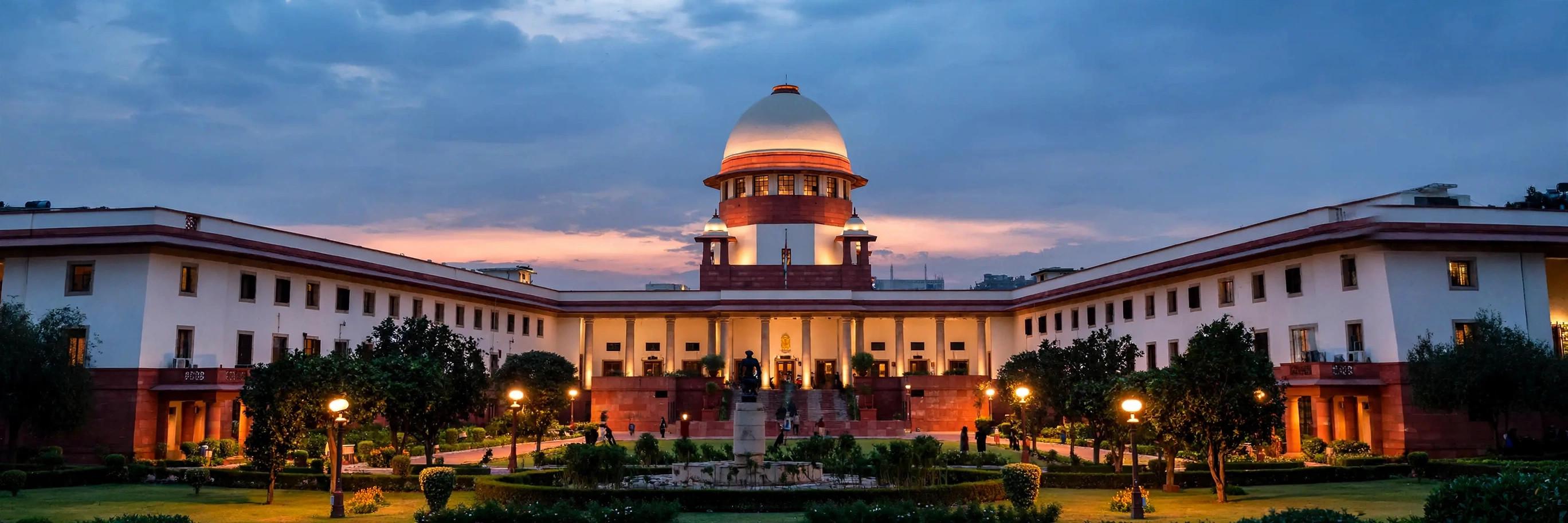
India's Supreme Court has suspended the life sentences of two men convicted in the Bilkis Bano gang-rape and murder case and granted them bail, more than 17 years after they were first jailed. The order was passed on 28 October and uploaded to the court's website on Sunday.
Supreme Court grants bail after 17 years in jail
A bench of Justices M.M. Sundresh and P.B. Varale suspended the sentences of Bipinchand Kanhaiyalal Joshi, also known as Lala Doctor, and Pradeep Ramanlal Modhiya, noting that both men had spent more than 17 years in prison and that one of them suffers from a severe physical disability. The court directed that they be released on bail on terms and conditions to be imposed by the trial court.
According to reports of the order, the bench observed: "Having heard the parties, suffice it to state that the appellants have been under incarceration for a period of more than seventeen years, and also the fact remains that one of the appellants has a severe handicap."
Appeals against conviction still pending
The two men had approached the Supreme Court challenging a Bombay High Court judgment of 4 May 2017, which upheld their convictions and life sentences. Their appeals remain pending before the top court, and the latest order does not set aside their convictions. The appeals will be listed for hearing in due course.
Senior advocate Siddharth Luthra, appearing for the two convicts, told the court they had already undergone more than 17 years of incarceration. He also submitted that one of the appellants had not been named in the original First Information Report and had been implicated nearly three years after the incident.
The charges and the convictions
Joshi and Modhiya were convicted by the trial court of multiple charges, including rioting, rape and murder, under Sections 143, 147, 302 and 376 of the Indian Penal Code. They were among 11 men convicted in the case and sentenced to rigorous imprisonment for life.
The Bilkis Bano case: what happened in 2002
The case dates to the communal violence in Gujarat that followed the burning of the Sabarmati Express at Godhra on 27 February 2002. Bilkis Bano, then 21 years old and five months pregnant, fled her village of Randhikpur with her family as violence and arson spread. On 3 March 2002, while travelling near Pannivel in Dahod district, the group was attacked by a mob. According to the prosecution, Bilkis Bano was gang-raped and seven members of her family, including her three-year-old daughter, were killed.
The trial was transferred out of Gujarat, and the Bombay High Court upheld the convictions in 2017.
Why the 2024 remission ruling still matters
Joshi and Modhiya are also among the 11 convicts whose premature release — granted as remission by the Gujarat government — was quashed by the Supreme Court on 8 January 2024. The court held that Gujarat was not the appropriate government to grant remission, as the trial had been transferred to Maharashtra, and ordered the men back to jail.
The latest bail order does not reverse that 2024 judgment. It is a separate proceeding, granted while the convicts' appeals against their convictions are still to be decided — the two men remain convicted.
What happens next
The trial court will now set the terms and conditions of bail, after which the two men can be released. Their appeals against conviction will be heard in due course, and the outcome will decide whether the life sentences ultimately stand.
Related coverage on TrendWire
- Supreme Court to Rule on Trump Asylum Ban at Southern Border
- Cyclone Akvan: Severe Storm Heads for Andhra Coast by November 19
- India Beat New Zealand by 22 Runs to Seal Historic ODI Series Win
Tags: #BilkisBano #SupremeCourt #IndiaNews #GujaratRiots #Justice #IndianJudiciary #BreakingNews
Comments (0)