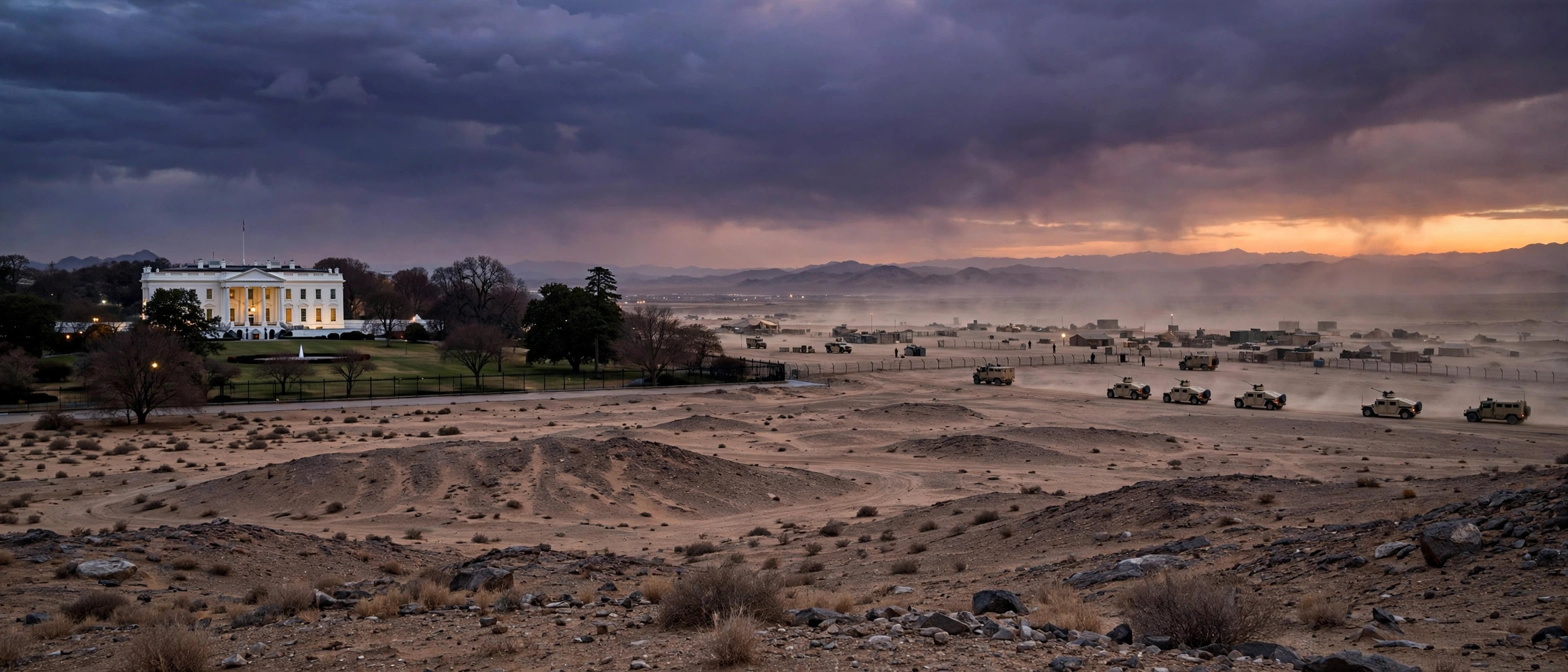
President Donald Trump has said he will wait until the new year before deciding whether to order further military action against Iran, even as Israeli Prime Minister Benjamin Netanyahu presses Washington for a fresh bombing campaign. The decision, reported on Thursday, puts a pause on one of the most consequential questions facing the White House — and exposes a growing divide between the two allies over how and when to confront Tehran.
Trump: "We will see what happens after the beginning of the year"
Speaking to Axios in a brief telephone interview aboard Air Force One as he flew back to the United States after the APEC summit in China, Mr Trump said he was in no hurry to decide. "I am not rushing into any decision [on Iran]. We will see what happens after the beginning of the year," he said, according to Axios.
He gave a similar answer to Reuters, telling the news agency: "We'll talk about that after the new year begins," and adding: "We have time." In a Fox News interview aired the same day, he repeated the position, saying: "We'll see what happens after Jan. 1."
Netanyahu pushes for a four-to-seven-day bombing campaign
While Mr Trump takes a pause, Mr Netanyahu is stepping up pressure for a joint bombing campaign soon. According to the New York Times, the Israeli prime minister is pushing for a joint operation lasting four to seven days, citing concerns that Iran is rebuilding its missile and drone capabilities while potentially advancing chemical and biological weapons programmes.
Israel's Channel 13 reported that Mr Netanyahu told a security meeting on Wednesday evening that military action against Iran was "unavoidable". A senior Israeli official told Ynet News that "Netanyahu is putting enormous pressure on the Americans, hoping to get to Trump and extract a green light from him."
Mossad chief sent to Washington
The diplomatic push has also intensified. According to Axios, Mr Netanyahu sent Mossad chief Roman Gofman to Washington and Miami last week for talks with CIA Director John Ratcliffe and White House envoy Steve Witkoff. An Israeli source told Axios that Mr Gofman, one of Mr Netanyahu's closest confidants, was dispatched to press for a resumption of the war against Iran.
What targets are on the table?
According to Axios, the military options under consideration include strikes on suspected Iranian nuclear facilities, among them the heavily fortified Pickaxe Mountain complex, buried deep beneath a mountain, as well as military installations, bridges, power plants and Iranian leaders. A senior Israeli military officer told Channel 13 that an operational plan jointly developed by the Israeli military and US Central Command had already been approved. "The only question remaining is when, and we are waiting for President Trump's decision and the right timing," the officer said.
Mr Trump has not authorised another major operation. Last week, he said another major round of strikes was "quite unlikely", while Secretary of State Marco Rubio has argued that Washington is already achieving its objectives through economic pressure without the need for major combat operations. Mr Rubio last week presented a third path — distinct from either reigniting the war or concluding a peace agreement with Tehran — noting that the administration could sustain its pressure campaign and tighten economic curbs on Iran.
Gulf states warn of devastating retaliation
The deliberations come amid escalating attacks across the Persian Gulf and stalled negotiations with Tehran. Gulf Arab governments have warned that renewed strikes could provoke devastating retaliation against regional energy infrastructure, according to reports. Mr Trump also said he did not believe reports that Iran was planning a dirty-bomb attack to spread radioactive material in Washington, but added that Tehran was exploring alternatives after US strikes severely damaged its nuclear programme.
The timing could mean Mr Trump is giving the naval blockade and economic pressure campaign more time to play out, as many of his advisers and Gulf leaders are urging. It could also mean he wants to leave time for military action before a new Democratic-controlled Congress settles in if Iran does not make concessions by the end of the year. His stated preference to wait until the new year does not preclude a change of course should circumstances deteriorate — and, as Axios noted, the day before the war began in February, he said he had not made a decision, though he had already ordered strikes.
What happens next
For now, the pause holds. Washington will continue evaluating its options over the coming weeks, Mr Netanyahu will keep pressing for a green light, and Gulf capitals will keep warning of the costs of a wider war. The next decision point is January — and, as Mr Trump himself put it, "we'll see what happens after the beginning of the year."
Related coverage on TrendWire
- Trump Warns Iran: 'No Hesitation' on Military Force Right Now
- Third US Aircraft Carrier Arrives in Middle East Amid Iran Tensions
- IEA: Iran War Is 'Largest Threat' to Energy Security in History
Tags: #Trump #Iran #Netanyahu #MiddleEast #USPolitics #IranStrikes #WorldNews
Comments (0)