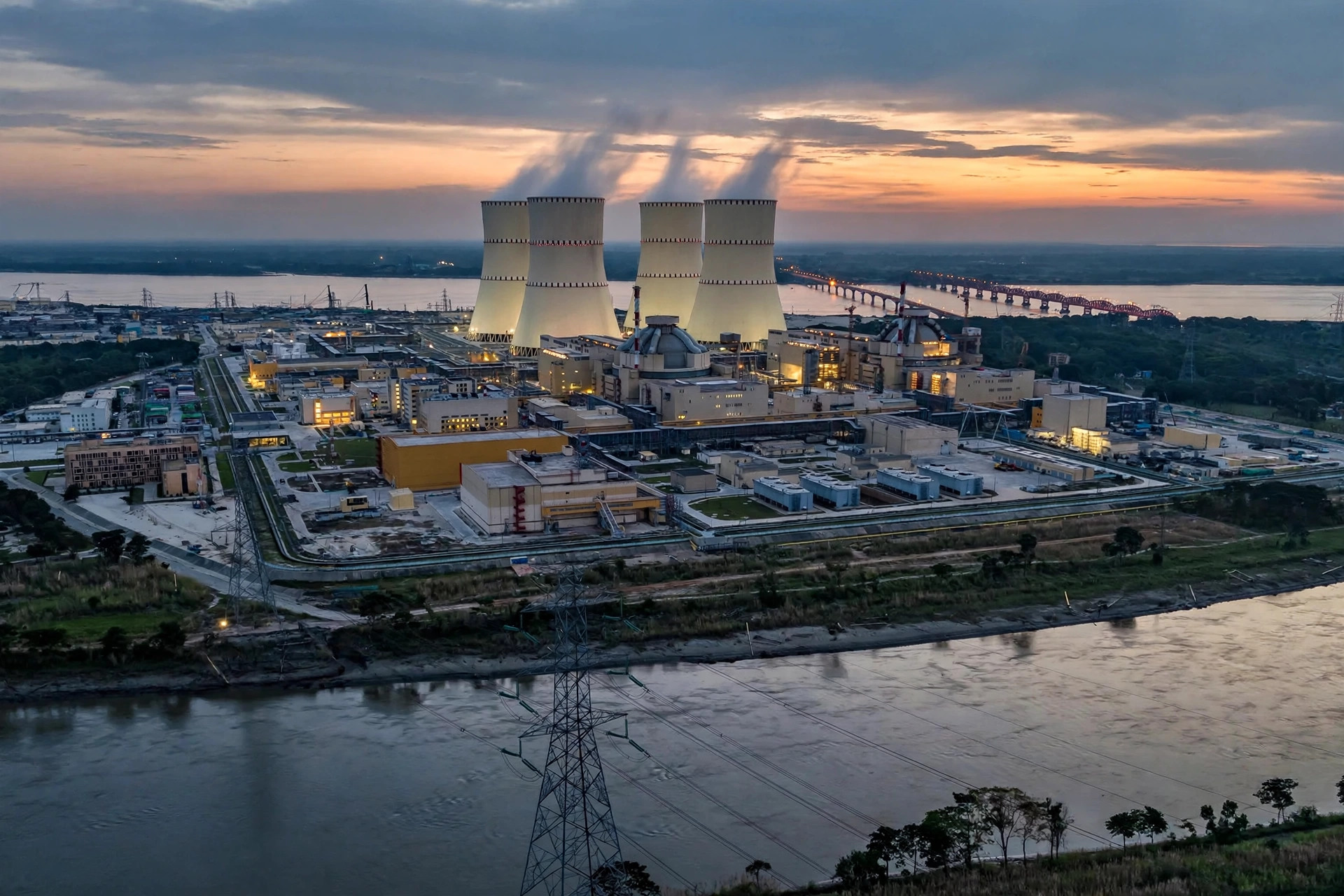
Bangladesh has switched on nuclear power for the first time in its history, with the first unit of the Rooppur Nuclear Power Plant feeding electricity into the national grid on a trial basis. The milestone makes Bangladesh the 33rd country in the world to generate electricity from nuclear fission, according to officials and reports from the plant.
Rooppur Nuclear Plant Begins Trial Power Supply
The first grid synchronisation took place at 3:16pm on Tuesday, 17 November 2026, when Unit 1 of the plant at Rooppur in Ishwardi, Pabna district, began supplying up to 350 megawatts (MW) to the national grid. Science and Technology Minister Fakir Mahbub Anam attended the connection at the plant, around 160 kilometres from Dhaka.
According to Bangladesh's Daily Star, the unit initially supplied up to 350 MW before its output was reduced to 300 MW to maintain grid stability. The plan was to keep the unit synchronised with the grid for roughly eight to ten hours while engineers checked the turbine, generator and grid coordination, then disconnect it again for further technical tests.
A Trial Run, Not Yet Commercial Power
Officials were careful to stress that Tuesday's feed was a test, not the start of commercial generation. Under the agreement with the Russian contractor, Unit 1 must undergo a 10-month trial operation before it begins supplying electricity commercially at full capacity, with each successive phase requiring approval from the Bangladesh Atomic Energy Regulatory Authority.
The unit reached first criticality — the point at which its fission chain reaction becomes self-sustaining at low power — in October 2026, a step that typically precedes grid synchronisation by only a few weeks. The minister has said he aims for output of 1,100 MW to 1,200 MW by January 2027 as testing progresses.
What Rooppur Means for Bangladesh's Energy Future
The Rooppur plant comprises two Russian-designed VVER-1200 pressurised water reactors, each rated at 1,200 MW, for a combined capacity of 2,400 MW once both units are in commercial service. The facility is expected to meet more than 10 per cent of Bangladesh's electricity demand once fully operational, helping the country diversify its energy sources.
The project, built by Rosatom's engineering arm Atomstroyexport, carries an estimated cost of about $12.65 billion, financed largely through Russian state loans. Construction of the first unit began in November 2017 under a 2015 agreement with Moscow, during the administration of ousted prime minister Sheikh Hasina. The original completion deadline of December 2025 has been extended twice, and now stands at June 2028. Rosatom delivered the first nuclear fuel assemblies for Unit 2 in late October.
Why the Milestone Matters
For a country that has long relied on gas and imported fuel for power, Rooppur represents a major shift in energy strategy. If the trial phase proceeds on schedule, steady commercial output from Unit 1 could begin in the second half of 2027, with the second reactor following later — a timeline that will be watched closely in Dhaka and in Moscow alike.
Related coverage on TrendWire
- Bangladesh Deploys Paramilitary as Hasina Return Sparks Unrest
- Bangladesh Garment Factories Shut Indefinitely in Wage Row
- IEA: Iran War Is 'Largest Threat' to Energy Security in History
Tags: #Bangladesh #Rooppur #NuclearPower #NuclearEnergy #SouthAsia #Energy #Rosatom #BangladeshNews
Comments (0)