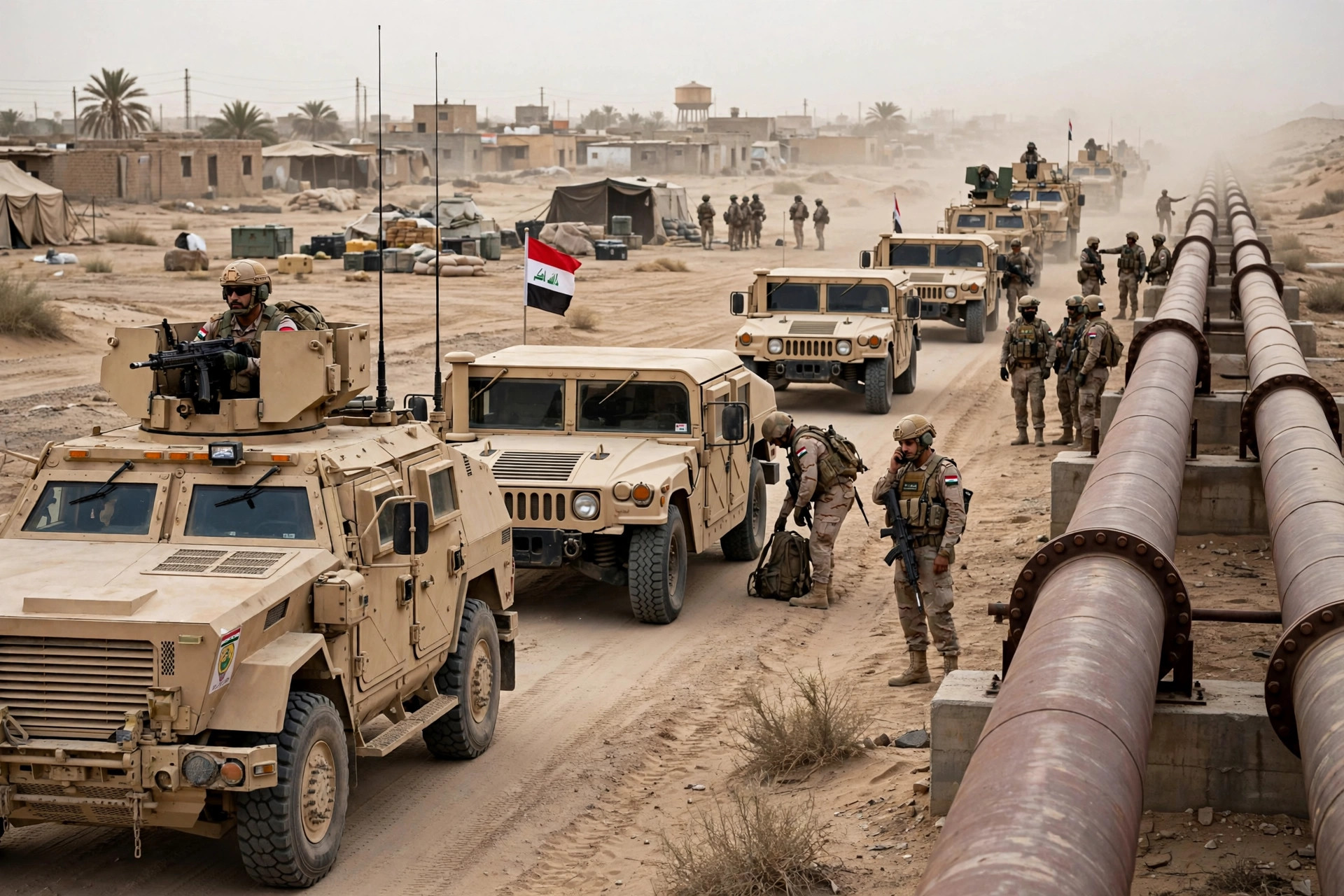
Iraq's Prime Minister Ali al-Zaidi has launched his toughest challenge yet to the Iran-backed militia Kataib Hezbollah, ordering a crackdown on an oil-smuggling network that investigators say has stolen hundreds of millions of dollars of state crude since 2021. Government troops are now massing around the militia stronghold of Jurf al-Sakhar, south of Baghdad, in a standoff with one of Iraq's most heavily armed groups.
Iraq oil smuggling probe targets Jurf al-Sakhar
According to senior security, army, police and oil officials who spoke to Reuters, the smuggling was carried out with accomplices inside the security and oil apparatus. A leaked intelligence report said crude had been siphoned from two state pipelines passing through the closed area, with the perpetrators allegedly building makeshift underground refineries to process the stolen oil.
A high-level government committee entered the restricted zone on 13 November with military backing. Two security sources who took part in the inspection told Reuters that investigators found a crude pipeline punctured, with oil siphoned into makeshift storage pits. The 26-inch pipeline carries at least 200,000 barrels of crude per day, according to an Iraqi Oil Ministry document.
Nine officials dismissed as troops mass outside the town
So far, nine senior security and oil officials have been dismissed, including the Babil police chief, the province's intelligence and security commanders and the director of the state-run Oil Pipelines Company. Mr al-Zaidi has ordered all suspects to be referred to the courts.
The prime minister has ordered senior commanders to deploy additional forces around Jurf al-Sakhar and prepare for the entry of government troops. A security source told The National the deadline for Kataib Hezbollah's withdrawal is 8pm on Friday, 20 November.
What is Jurf al-Sakhar?
Jurf al-Sakhar, roughly 345 square kilometres about 50km south-west of Baghdad, sits on the Shia pilgrimage route between the capital and the holy city of Karbala. It was recaptured from ISIL in 2014 by the Popular Mobilisation Forces, and Kataib Hezbollah — one of the largest groups within the PMF — subsequently took full control, barring state institutions from entering. Around 140,000 displaced residents have been prevented from returning, according to Al Jazeera.
Kataib Hezbollah denies the allegations
Kataib Hezbollah, which the United States has designated a terrorist organisation, denies the oil-smuggling allegations and calls the crackdown part of a campaign to seize its weapons. The group has accused Mr al-Zaidi of corruption and framed the crackdown as political extortion. Iraq's largest parliamentary bloc, the Co-ordination Framework, failed to agree on a plan to end the standoff in a crisis meeting late on Monday, according to The National.
What happens next in the Iraq militia standoff
Since taking office in May, Mr al-Zaidi has made the disarmament of all armed factions a priority, amid pressure from the United States. An initial 30 September 2026 deadline to bring all weapons under state control has since been pushed to June 2027, and the groups have resisted repeated calls by both Mr al-Zaidi and US President Donald Trump to disarm. Whether the government presses ahead with its Friday deadline — and whether Kataib Hezbollah withdraws from the six oil sites inspected by the committee — will determine whether Iraq's most powerful militia finally yields to state authority, or whether the standoff escalates into open confrontation.
Related coverage on TrendWire
- Three Oil Tankers Catch Fire After Hitting Mines in Strait of Hormuz
- IEA: Iran War Is 'Largest Threat' to Energy Security in History
- Third US Aircraft Carrier Arrives in Middle East Amid Iran Tensions
Tags: #Iraq #KataibHezbollah #OilSmuggling #JurfAlSakhar #MiddleEast #AliAlZaidi #Iran #Baghdad
Comments (0)